TOUCHING BOUNDARIES
- What Drives Art and Science Collaboration
- Panel Discussion | With Špela Petrič, Markus Maeder, Miha Turšič, Matthias Rillig, Regine Rapp, and Christian de Lutz
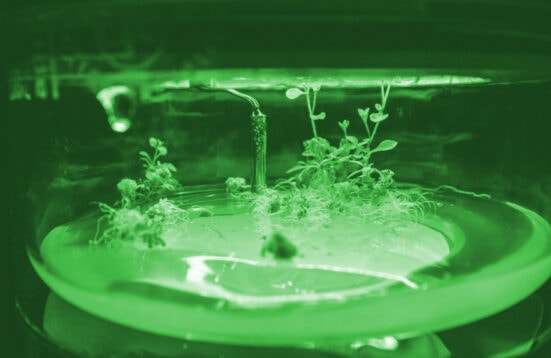
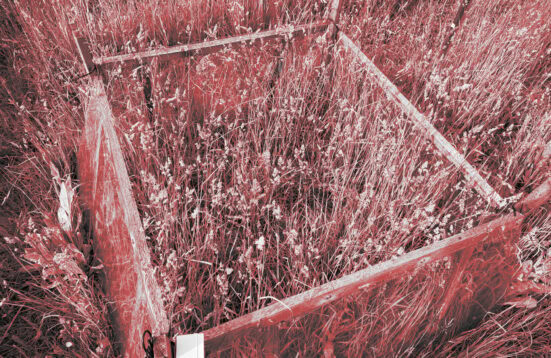
The encounter of scientific research and artistic intelligence produces new ways of seeing science, art and life, creating value in labs and beyond. Join the conversation with international scientist, artists, art science mentors, and art theoreticians at the Berlin Science Week at the Haus der Kulturen der Welt (Safi Faye Saal): While it is becoming more common to invite artists in laboratories, with the goal of furthering science communication of driving innovation, it is important to note that an “artist is not primarily in a scientific lab to perform outreach activities for lab’s research or illustrate and communicate scientific research results, even though this can also be an outcome. The artist is a researcher in the arts. Remember, while “the means” or the process may be the same, and the goals may also include to arrive at new insights, the product may take many different forms.” Whatever the structure of an artist and scientist collaboration there is likely to be points where these two very different forms of research converge and diverge, creating frictions that have the potential to expand results in both fields. What is the human role in these collaborations both inside the lab and further afield? How do these collaborations effect stakeholders, including policymakers and the public? Read more
Event | Performance
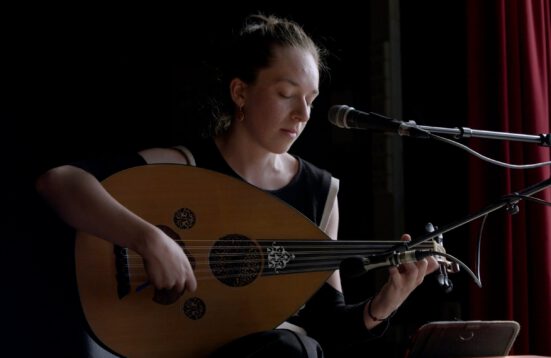
Prosodia
- Performance | With Nicoline van Harskamp
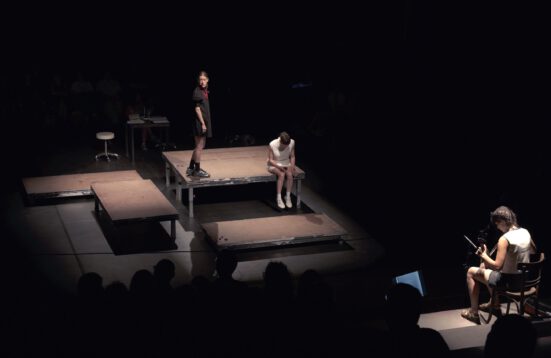
The performance work “Prosodia” posits a prosodic form for AI-generated voices, or synthetic speech, that reflects the rhythmic, formulaic nature of human storytelling, present in ancient epic poetry as much as in contemporary influencer content. A ‘synthetic actress’ named Prosodia, together with two human actresses, a stage director and a traditional musician, are rehearsing a stage adaptation of an old epic story. Prosodia’s inability to cry brings technical and artistic difficulties, because all epic stories end in tears. The cast finds a solution in one of Prosodia’s oldest features. They reflect on the technologies behind their skills, that is, the three generations of performed, artificial language: ‘tale-singing’, acting, and synthetic speech. In the process, it breaks down some of the myths around AI that have been spread by its for-profit developers. Central to the work is the Song of Prosodia, or the ‘epic synthetic’, performed by human and synthetic song, accompanied live with the strings of an oud. Read more
Event | Colloquium
IN PROGRESS… | COLLOQUIUM
- Research in Art, Science, and Humanities
- With WhiteFeather Hunter and Helen Yung
The Colloquium (on 15 September online only) addresses an international interdisciplinary research audience to present and discuss past, present, or future projects by artists and scholars, curators or editors from the fields of art, science, and the humanities. In this Colloquium session, artist and researcher Dr WhiteFeather Hunter and artist and researcher Helen Yung, in conversation with Regine Rapp, will discuss how human eggs, embryos, and menstrual stem cells have become entangled with biomedical research, commercial enterprise, and cultural narratives. Dr. WhiteFeather Hunter will present highlights from her work with menstrual stem cells, and her experiences with Big Tech and ‘blood farms’. Helen Yung will share her experience of creating and caring for human gametes within the assisted reproductive industry as a patient, family member, and artist-researcher. Following the original meaning of colloquium as “speaking together”, we want to provide a platform for exchange and embrace various kinds of work processes which are often not seen or talked about. Read more
Event | Book Release Party
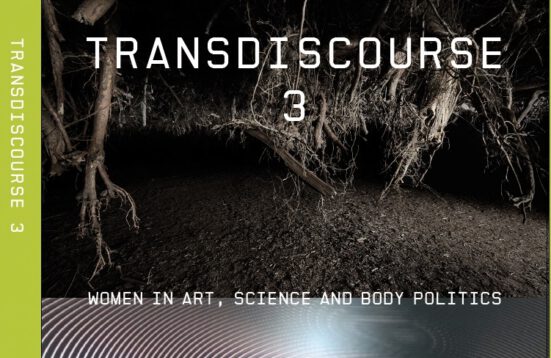
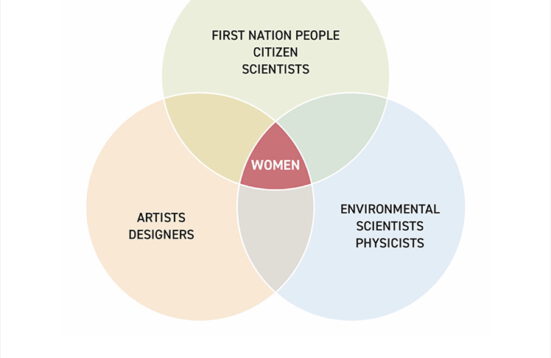
TRANSDISCOURSE 3: Women in Art, Science and Body Politics.
- Book Launch | With Jill Scott, Christa Sommerer, Alexandra Krawiec, Joanna Hoffmann, Inês Montalvão, and Regine Rapp
EVENT BOOKED OUT ! // Welcome to the book launch in context of the recent anthology “TRANSDISCOURSE 3: Women in art, science and body politics” (ed. by Jill Scott, Berlin; Boston: De Gruyter, 2025), a publication with transdisciplinary studies that explore the dynamic intersections of discovery, creativity, and inclusive futures from the arts and the sciences. There will be talks on-site with Jill Scott, Christa Sommerer, Alexandra Krawiec, Inês Montalvão, with an introduction by Regine Rapp; there will be also an after party with food and drinks. The new publication unites 26 international women mainly from the arts to explore dynamic intersections of science, body politics, and inclusive futures. Through creative approaches and collaboration with scientists, they reflect on the ethics of care and urgent social and environmental issues. Divided into five themes (“Contextualizations”, “Personal Reflections”, “Exhibitions”, “Conversations” and “Investigations”), the authors explore how the rethinking of creativity and body politics might affect human rights, sustainability, bodily representations, and personal expressions. “Transdiscourse 3” is a unique space for dialogue and a vital transdisciplinary resource, designed to inspire and encourage others to engage with creativity, discovery, and change. Read more
Event | Talk
CHRYSALIS. ARTISTS IN LABS
- Artist Scientist Dialogue
- With Helena Nikonole and Alvaro Rodriguez
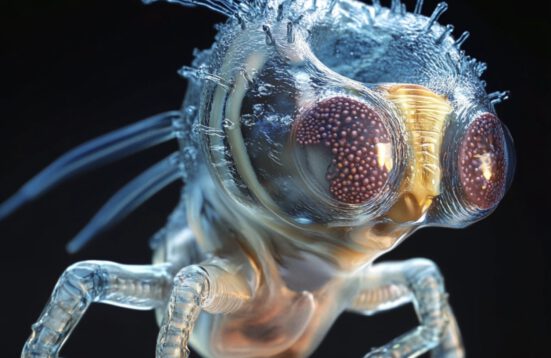
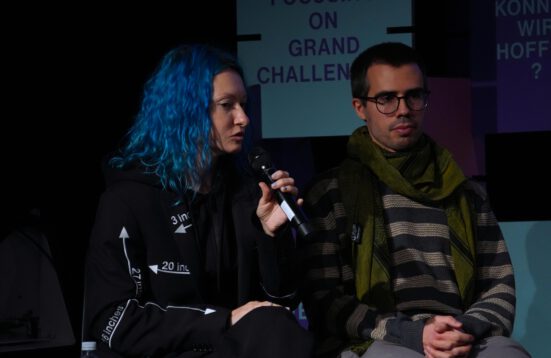
Welcome to the next “Artist Scientist Dialogue” in context of the current research project CHRYSALIS. ARTISTS IN LABS. Artist Helena Nikonole will introduce aspects of her artistic practice, including her projects Acoustic Agriculture and Speculative Species Evolution, and share some ideas behind her collaboration with Alvaro Rodriguez on microbial communities and sound. Dr Alvaro Rodriguez will introduce metagenomics, the technique he has been applying for studying microbial communities, and discuss its possible applications to understand the behaviour of the microbial communities exposed to sound stimuli. During 2025 and 2026, Art Laboratory Berlin is unfolding the new innovative project CHRYSALIS. ARTISTS IN LABS with an interdisciplinary exchange between art and science in Berlin science laboratories, kindly supported by Lottostiftung Berlin. We are currently receiving strong outcomes in transdisciplinary knowledge transfer, artistic research, art science communication, and some new artworks critically highlighting 21st-century innovations. Join us for the event on-site or online. Read more
Event | Workshop
CHRYSALIS. ARTISTS IN LABS
- Sonic Mind. Sound, Consciousness, and Technology
- Workshop with Julius Holtz
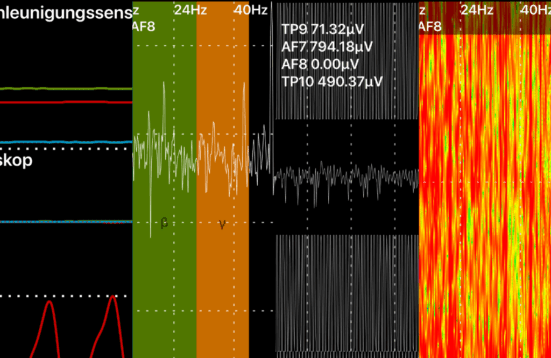
Welcome to the workshop “Sonic Mind. Sound, Consciousness, and Technology” with sound artist and researcher Julius Holtz, presented within the CHRYSALIS. ARTISTS IN LABS programme by Art Laboratory Berlin. The workshop examines how emerging technologies and increasing human–machine interrelations transform concepts of identity, consciousness, and community. Positioned at the intersection of sound art, neuroscience, and technological innovation, Holtz presents his research through projects such as Introspective Garden, focusing on the generation of sonic environments via sensor technologies, data sonification, and participatory methodologies. Participants can engage in embodied listening sessions that integrate theoretical reflection with practical experimentation, addressing mindfulness, collective perception, and human-machine interaction. The workshop further investigates the relationships between neural activity and adaptive soundscapes, considering their social, artistic, and ethical implications, and is open to artists, designers, researchers, and other interested participants. Read more
Event | Long Night of Science
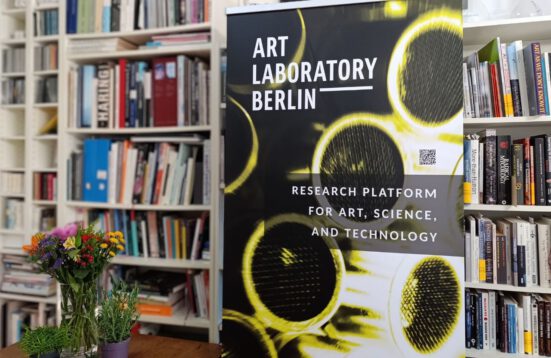
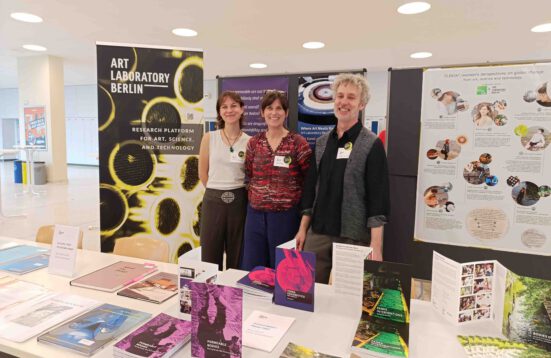
Art Laboratory Berlin at Long Night of Science (Berlin Dahlem)
- Collaborative Art Science Projects with the Rillig Lab | Ecology of Plants (FU Berlin)
Art Laboratory Berlin joins the Lange Nacht der Wissenschaften 2026 (6 June, 5–10 pm) together with the Rillig Lab | Ecology of Plants at the Institute of Biology, Freie Universität Berlin, Königin-Luise-Str. 12/14, 14195 Berlin. Founded in 2006, ALB is an award-winning platform at the intersection of art, science, and technology. Our decade-long collaboration with the Rillig Lab has produced various artist residencies, the research group “DIY Hack the Panke”, festivals such as “Matter of Flux” (2023) and “Bodies of Water” (2025), and the ongoing programme “CHRYSALIS. Artists in Labs”. Get a LNDW ticket and join us in Berlin Dahlem — everyone welcome! Read more
Event | Colloquium
IN PROGRESS… | COLLOQUIUM
- Research in Art, Science, and Humanities
- With Aisen Caro Chacin and Zahra Mokhtari
The Colloquium (on 26 May online only) addresses an international interdisciplinary research audience to present and discuss past, present, or future projects by artists and scholars, curators or editors from the fields of art, science, and the humanities. Artist and researcher Dr Aisen Caro Chacin will discuss a performance artwork exploring human dependency on critical care machines and our co-evolution with AI. Physicist Dr Zahra Mokhtar will discuss how groups (ants, cells, or social media users) can form coherent movements or sudden opinion shifts without a central leader. Following the original meaning of colloquium as “speaking together”, we want to provide a platform for exchange and embrace various kinds of work processes which are often not seen or talked about. Read more
Event | Talk
CHRYSALIS. ARTISTS IN LABS
- Artist Scientist Dialogue
- With Margherita Pevere and Germán Joosten
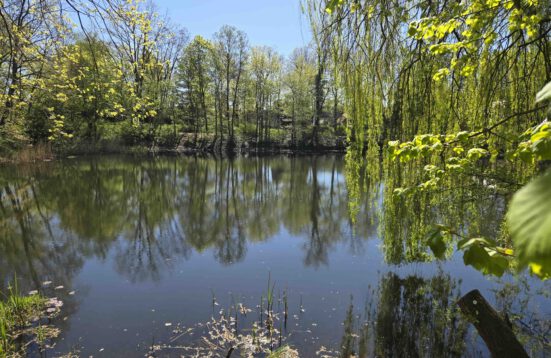
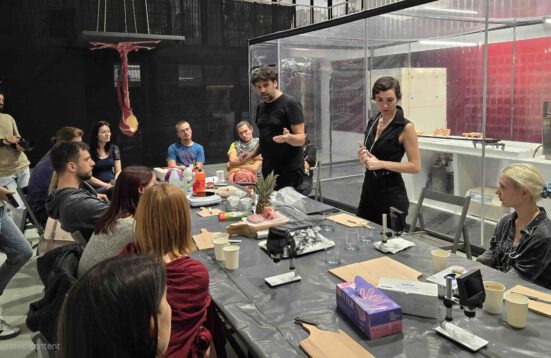
“Their world-building power lies in holding”: ponds and their ecology is marked by apparent stillness. The small water bodies that constellate the urban territory of Berlin unfold their intricate ecology in an apparent absence of motion, so different from the perpetual flow of rivers or the large tidal motions of lagoons. Drawing from her performance practice, artist and researcher Dr Margherita Pevere places the capacity of ponds to “hold” and transform living and dying matter at the heart of her research in the context of the ongoing research project Chrysalis. Artists in Labs. In the talk Margherita Pevere and her research partner, environmental anthrolopologist Dr Germán Joosten, will present their exchange across art and science, share the results and observations on their recent workshop “Pond Codex: Of Life and Death in Berlin’s Small Water Bodies” (10 May 2026), and bring the audience into the shallow but powerful depths of Berlin small water bodies. Read more
Event | Workshop
CHRYSALIS. ARTISTS IN LABS
- Pond Codex: Of Life and Death in Berlin's Small Water Bodies
- Workshop with Margherita Pevere and Germán Joosten
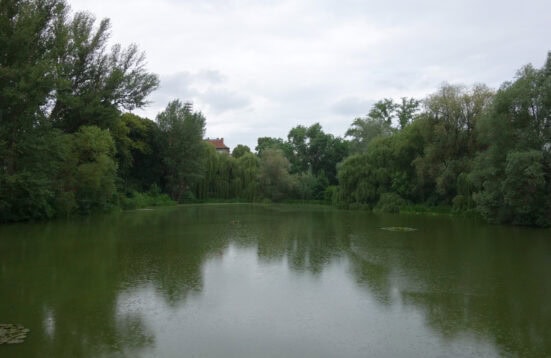
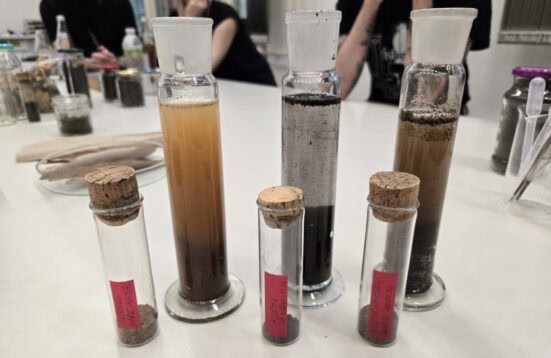
Margherita Pevere and Germán Joosten invite the audience to join the life cycle of Berlin’s ponds and small lakes. Acting as biodiversity hotspots and regulators of temperature, these small water bodies play a key role in urban ecology. Among their dwellers is Daphnia – commonly known as water flea – a small invertebrate which feeds on phytoplankton (microscopic algae), thus keeping phenomena like algae blooms in check. Its life cycle is fascinating: it reproduces mostly through cloning itself, but when things get rough, it can adapt to the environment, switch to sexual reproduction, and produce eggs that remain dormant in the sediment until better conditions arise. Daphnia can reveal much about the health, history, and possible futures of the small urban water bodies. Through hands-on sessions and speculative storytelling, workshop participants will assume a pond’s more-than-human perspective and explore Berlin as seen by its small aquatic inhabitants. Read more
Event | Meet up, Talk
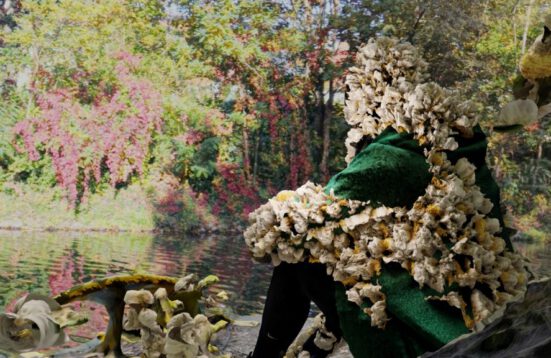
ART SCIENCE MEET UP
- Research Exchange and Get-Together
- With Fara Peluso, Jemma Woolmore, and Matthias Rillig
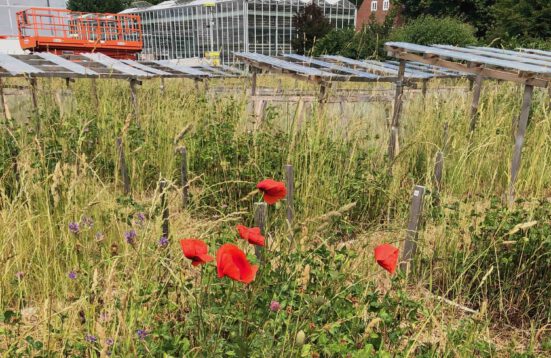
Art Laboratory Berlin and the Rillig Lab host an Art Science Meet Up in Berlin, bringing together artists and scientists interested in interdisciplinary research. The first session, open to the public, features presentations on current projects: Fara Peluso explores DIY bioplastics and community gardening to rethink human–ecological relations; Jemma Woolmore investigates chemical pollution through collaborative and embodied artistic methods; and Matthias Rillig presents research on how ecosystems respond to combined environmental pressures such as climate change, pollution, and land use. The second session invites participating artists and scientists to collaboratively design experimental approaches, discussing methods, concepts, and formats for joint research, followed by group exchange and collective reflection. Read more