Statement
The multiple award winning art and research platform Art Laboratory Berlin (ALB) presents interdisciplinary art projects in an international context. It was founded in 2006 by an international team of artists and art historians – including Regine Rapp & Christian de Lutz. Our main goal is the presentation and mediation of contemporary art at the interface of art, science and technology. In recent years, ALB has focused on the field of artistic research and the life sciences.
RESEARCH | Artistic Research, Art-Residences, Art-Science Collaboration
At all our international conferences, we have successfully brought artists and researchers from the humanities and natural sciences together in an active and sustainable dialogue. In recent years we have been successful in realising research projects between artists and scientists and in developing artist-in-residence programs, for example the Colloquium.
EXHIBIT | Sustainable discursive curatorial practice
It is an important aim of ALB, in the form of a close, long-term collaboration with artists, to follow the creative processes and make this visible in exhibitions, events and conferences. Instead of subordinating the artworks on exhibition to theory, we are interested in an inductive approach – that rather places the individual artistic work at the centre of inquiry. Explore the archive of our exhibitions here. Look at our series and programs here.
EDUCATE | Individual art education
ALB’s approach to art and research serves as a model, reaching a broad international audience of different ages through a variety of educational research formats. Highly praised in the press are not only our conferences, exhibition talks and our Colloquium, but in particular the format of workshops, as an open format – open to experiment, open to disciplines, and open to the outcomes. More about ALB’s event (in chronological order, from today back to 2011) HERE.
PUBLISH | Books, Edited Volumes, Articles, Papers
For more than fifteen years, Art Laboratory Berlin (ALB) has built a distinct publication profile at the intersection of contemporary art, the natural sciences and the humanities, contributing substantively to international debates on hybrid art, art–science research, and ecological thought. The publications position ALB as a sustained reference point for critical, interdisciplinary discourse on art, life sciences, neuroscience, critical AI research, and ecological futures. Books and edited volumes, published in-house and with academic presses such as TU Berlin University Press, map several long-term interdisciplinary research trajectories. Articles, papers, and book chapters – with De Gruyter, transcript, Bloomsbury, Reimer, Metzler, Steidl, Logos, Verlag für moderne Kunst and peer-reviewed journals (PLoS Computational Biology, Fungal Biology and Biotechnology) – develop ALB’s theoretical scaffolding. More HERE.
Discourse | Series and Topics
- Art & Science (2008 – present)
- Time and Technology | Exhibitions, Talks, Conference (2011 – 12)
- Synesthesia. A Multisensory Phenomenon | Exhibitions, Talks, Conference (2012 – 13)
- [macro]biologies & [micro]biologies. Biosphere, Organism, Bacteria, Molecules | Group Exhibitions, Talks, Workshops, Publications (2013 – 15)
- Nonhuman Subjectivities | Group Exhibitions, Talks, Workshops (2016 – 17)
- Nonhuman Agents | Exhibition, Workshops, Conference (2017 – 18)
- Mind the Fungi. Art science research project, with TU Berlin’s Institute of Biotechnology | Exhibitions, Walks, Talks, Workshops, Publication (2018 – 20)
- CAMILLE DIARIES. New Artistic Positions on M/otherhood, Life and Care | Group Exhibition, Conference (2020)
- DIY Hack the Panke. Art science research project | Workshops, Talks, Walks, Performances (2018 – ongoing)
- UNDER THE VIRAL SHADOW. Networks in the Age of Technoscience and Infection | Group Exhibition, Workshops, Talks, Conference (2021)
- Hackers, Makers, Thinkers. Collective Experiments in Social Fermenting (2022)
- Matter of Flux | Exhibition (bio politics, body politics) (2023)
- Matter of Flux | Festival (Berlin-based international network of women/FLINTA* in art, science, and technology) (2023)
- Permeable Bodies, artistic and feminist explorations of embodiment and body identity in flux, with workshops, talks, performances, podcast (2023)
- Research projects, involving art, anthropology, biology, design (2024-25)
- CHRYSALIS. ARTISTS IN LABS, art science research (2025 – 26)
- Discursive emphasis on Posthumanism, Hydrofeminism
COOPERATION PARTNERS
Our academic cooperation partners in Berlin include the Freie Universität Berlin – in particular the Rillig Lab | Ecology of Plants at the Institute of Biology –, Humboldt-Universität zu Berlin, Technische Universität Berlin, the Einstein Center Digital Future, the Berlin Open Lab at TU Berlin and the Berlin University of the Arts (UdK), and the Weizenbaum Institute at UdK Berlin – as well as German Research Foundation (DFG) on the federal level. An intense exchange connects us with the Max Planck Institute for the History of Science on questions of historical epistemology and cultures of knowledge. Internationally, we collaborate on an ongoing basis with institutions such as Aksioma (Ljubljana), Bioart Society (Helsinki), BioClub Tokyo, Cultivamos Cultura, EMAP (European Media Art Platform), Kersnikova Institute (Ljubljana), MetaPhorest (Waseda University, Tokyo), and the Waag Society (Amsterdam). Among our Berlin programme partners in the field of art and science communication are the CTM Festival, Haus der Kulturen der Welt (HKW), and the Berlin Science Week.
SUPPORTING PARTNERS
The work of Art Laboratory Berlin is made possible by public and private funders whose sustained trust over many years has been essential in enabling a continuous line of research. We are particularly grateful to the Berlin Senate Department for Culture and Europe, the Berlin Senate Department for Higher Education and Research, Health and Long-Term Care, and the Hauptstadtkulturfonds for their past and ongoing support, as well as to the Berlin Senate Department for Urban Development and the Environment. At the federal and European level, our thanks go to the Goethe-Institut, the Alexander von Humboldt Foundation, the Federal Ministry of Education and Research (BMBF) and the European Union. Key foundation and programme partners of our science-oriented projects include the Lotto-Stiftung Berlin, the Stiftung Kunstfonds, and the Wellcome Trust. In an academic context, individual projects have been supported by the Berlin University Alliance, Freie Universität Berlin, and Humboldt-Universität zu Berlin, Technische Universität Berlin.
Team
The current team of Art Laboratory Berlin includes:
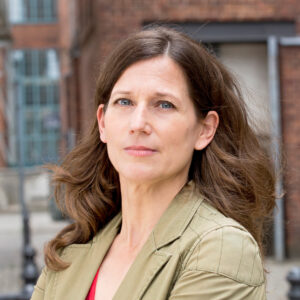
Regine Rapp
Co-director, art historian, and curator
Regine Rapp is an art historian, curator, and co-director of Art Laboratory Berlin (ALB). She researches, teaches, curates, and publishes on 21st century art at the interface with science and technology, currently on her newest research project “Hybrid Art Histories”. As a guest professor for Art & Science at the Art Academy Münster, she taught Hybrid Art from March 2024 until August 2025. As co-founder of Art Laboratory Berlin (2006) she has conceived, curated, and researched on more than 50 exhibition projects (Time and Technology, Synaesthesia, [macro]biologies & [micro]biologies). In 2011 parallel to the exhibition Sol LeWitt. Artist’s Books, she conceived the international Sol LeWitt Symposium at Art Laboratory Berlin. Along with Christian de Lutz she developed the international conference Synaesthesia Discussing a Phenomenon in the Arts, Humanities and (Neuro) Science (2013). The Nonhuman Subjectivities (2016/17) and Nonhuman Agents (2017/18) series of exhibitions, performances, workshops, and an international conference reflected on Art and Science in the post-anthropocentric era. Current publications: “Das Konzept ‘Nichtmenschliche Subjektivitäten’. Aktuelle künstlerische Praktiken im Posthumanismus” (Berlin: Reimer 2019); Mind the Fungi, co-edited, TU Berlin University Press, Berlin 2020; „Hybrid Art“ (Grätz/ Vogel (ed.): NatureCulture, Göttingen 2022); “Artistic Research and Ecology: Pollution, Plastic, Water” (I Reichle (ed.): Plastic Ocean: Art and Science Responses to Marine Pollution, Berlin, Boston 2021); “Saša Spačal. Symbiosen und planetarische Verflechtungen” (Kunstforum International, vol. 281, 2022); “Ko-Existenzen. Über menschliche und nicht-menschliche Akteur:innen” (Kunstforum International, vol. 281, 2022); “Mehr-als-menschliche Allianzen” (J Ullrich (ed.): Nichtmenschliche Ästhetik, Stuttgart: Metzler 2024).
Contact: rapp(at)artlaboratory-berlin.org
List of Publications HERE.
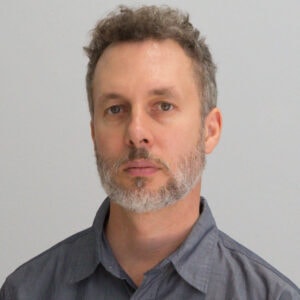
Christian de Lutz
Co-director, curator, and researcher
Christian de Lutz is a curator, originally from New York. As co-founder and co-director of Art Laboratory Berlin he has curated over 50 exhibitions and many talks workshops and seminars, including the series Time and Technology, Synaesthesia, [macro]biologies & [micro]biologies, and Nonhuman Subjectivities. His curatorial work focuses on the interface of art, science and technology in the 21st century, with special attention given to BioArt, DIY Science initiatives and facilitating collaborations between artists and scientists. His interest is in building multidisciplinary networks and unleashing their creative potential. Currently he is involved in collaborative cultural projects connecting Berlin with other cities in Europe and Asia, building international networks for art-science and DIWO (Do-It-With-Others) communities. He has published numerous articles and essays in journals and books, including [macro]biologies & [micro]biologies. Art and the Biological Sublime in the 21st Century (co-edited, 2015), which reflects theoretically on Art Laboratory Berlin’s 2013-15 program, and an introductory essay in Half Life. Machines/ Organisms, Artistic Positions in the context of Climate Change and Extinction (2018). In context of the interdisciplinary art & science project Mind the Fungi (2018-20) he was a researcher affiliated with the Institute for Biotechnology, TU Berlin.
Contact: cdelutz(at)artlaboratory-berlin.org
List of Publications HERE.
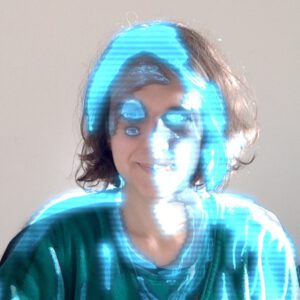
Alice Cannavà
Cultural Worker, Designer, and Publisher
Alice Cannavà is an independent cultural worker, designer, and publisher. She studied visual arts in Milan and Vienna and currently attends courses in the history of science and technology at the TU Berlin. As publisher, she co-edits and produces Occulto Magazine – an independent journal that brings together sciences, humanities, and the arts – and, more recently, the Occulto Editions – a diverse and evolving landscape of zines, artist’s books and special editions. As designer, she’s mostly active in the cultural scene, recent and ongoing collaborations include the art and research platform Art Laboratory Berlin, the feminist experimental music festival Heroines of Sound (Berlin), the center for art and media technology V2_, Lab for the Unstable Media (Rotterdam), and the artist and researcher Martin Howse (Berlin/London). As cultural worker, she curates and performs at cultural events and workshops in Berlin and beyond. Since 2020, she’s part of the extended team of Art Laboratory Berlin as designer/coder for print and digital media. In 2023 she joined the Matter of Flux festival and network. In 2024 she designed and produced the book MATTER OF FLUX. Art, Biopolitics, and Networks with Care, edited by Regine Rapp.
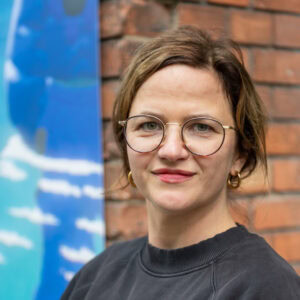
Lena Fließbach
Curator and researcher
Lena Fließbach is an independent curator, speaker and writer based in Berlin. Her practice focuses on ecological and social issues. She has developed numerous exhibitions, including for the Museum of Fine Arts (MdbK) Leipzig (Zero Waste, 2020), the Galerie im Körnerpark (Silent Spring, 2022) and the Künstlerhaus Lauenburg (Fluid Futures, 2024), as well as transdisciplinary programmes for institutions such as the Hamburger Bahnhof – National Gallery of Contemporary Art and the Urania Berlin. Through her projects, which address questions of climate justice and the interrelations between social and ecological crises, she creates spaces for counter-movements, new forms of community and more-than-human perspectives. Lena Fließbach has taught at various universities, works with the youth council of Weltacker e.V. and is involved in SALOON Berlin, a network for FLINTA* in the arts. At Art Laboratory Berlin, she was involved in the Matter of Flux Festival (2023), curated the exhibition Planting Futures, Sharing the Harvest (2025), and will be curating upcoming projects.
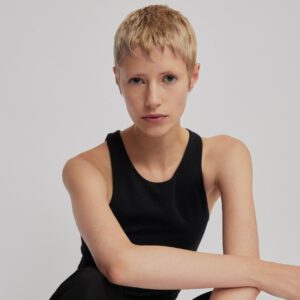
Neele Marr
Curatorial assistant
Neele Marr is a Berlin-based interdisciplinary researcher with a background in the mind sciences. After graduating with a B.Sc. in Psychology from Freie Universität Berlin, she is currently pursuing an M.A. in the interdisciplinary Mind and Brain program at Humboldt-Universität Berlin, which combines neuroscience, behavioural sciences, and philosophy of mind. Her research interests centre on aesthetic emotions and transformative experiences, particularly the role of wonder in shifting our understanding, values, and preferences. Alongside her academic pursuits, she engages with these and related topics at the intersection of arts and science in practical contexts as an assistant at Art Laboratory Berlin.
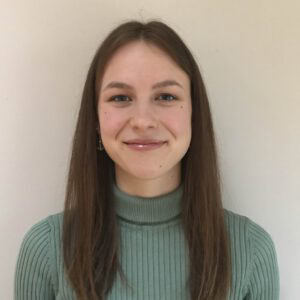
Dr Amandine Hong-Minh
Science communicator and research assistant
Dr Amandine Hong-Minh has a background in cell biology. After studying genetics for her undergraduate degree, she completed an interdisciplinary PhD at the University of Edinburgh, where she worked across both physics and biology research groups. This interdisciplinary training shaped her interest in how knowledge is produced, translated, and communicated differently across scientific cultures. Alongside her research, Amandine was actively involved in science communication and public engagement throughout her PhD, experiences that shaped her interests and direction. She is particularly drawn to interactive and unconventional ways for people to encounter science beyond traditional academic contexts. Through exhibitions, workshops, and participatory formats, she hopes to make science more accessible, engaging, and resonant for diverse audiences. At Art Laboratory Berlin Amandine is involved in researching, assisting, and mediating art science projects.
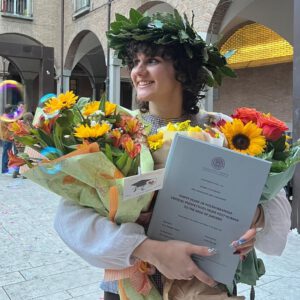
Giulia Marsigli
Curatorial and research assistant
Giulia Marsigli recently completed her master’s degree in Art, Museology, and Curatorship at the University of Bologna. With a background in art history, she developed a strong interest in contemporary art and visual studies, focusing on how artistic and curatorial practices engage with broader cultural and theoretical questions. Her research explores the convergence of art, media, and technology, with particular attention to posthumanist thought and its impact on contemporary art discourse. In her master’s dissertation, Thirty Years of Posthumanism: Critical Perspectives from Post Human to The Milk of Dreams she examines the development of posthumanist theory through two key exhibitions: Post Human (1992), curated by Jeffrey Deitch, and The Milk of Dreams (2022), curated by Cecilia Alemani. Through this comparison, she highlights a shift from technology-centered ideas of bodily transformation toward ecological, feminist, and collective perspectives. Her interests include posthumanism, media studies, and the ways technology shapes contemporary visual culture. During her internship at Art Laboratory Berlin, she is assisting with research and exhibition development.
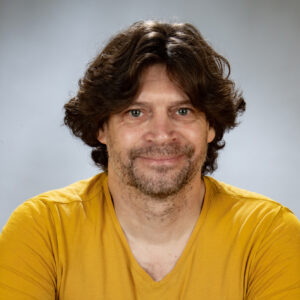
Tim Deussen | Studio Deussen
Photographer, videographer
After his interdisciplinary studies in film, psychology and philosophy at New York University Tim Deussen founded his own studio in Berlin in 1996. His studio has a strong focus on innovation paired with the sparkling creativity of an independent studio based in the heart of Berlin. This is where he creates on the edge media experiences. They range from classical media like photography or video to new media like AR or VR. With his studio he develops methods and technologies that give artists the opportunity to take advantage of XR-based creation tools. Together with fellow artists, creators, and technologists Studio Deussen explores how the conception, creation and distribution of art can be re-invented in order to make best use of the chances that XR-technology offers to us. For many years Berlin Tim Deussen has produced numerous valuable photographic and video documentation for Art Laboratory Berlin, that now builds the visual ground to ALB’s web archive.
Former team members of Art Laboratory Berlin, see here.
Press
Press Voices on ALB
“[Art Laboratory Berlin] confronts us with our presuppositions about our role vis-à-vis the living and technology. […] For this, the ALB team curates international actors from art and science who venture beyond the usual horizon of knowledge.” (Tagesspiegel, Berlin)
“[Here], art historian Regine Rapp and New York artist Christian de Lutz have quickly established the nucleus of a German BioArt center.”
(Frankfurter Allgemeine Zeitung, Joachim Müller-Jung)
“Art Laboratory Berlin […] have since many years presented very exciting projects connecting Science and Arts. They are a rare instance of serious interdisciplinary thinking.“ (Goldberg Stiftung)
“Much like the projects that Art Laboratory Berlin gravitates towards, the space itself defies any and all categorical boundaries traditionally upheld in the art world. ALB […] functions as an exhibition space, research group, and platform for bringing together artists, scientists, and researchers to discuss impending issues of our time related to life, technology, and culture.” (CLOT Magazine)
“Rapp and de Lutz, who have long worked at the intersections of art, technology and the natural sciences to curate ambitious exhibitions, speak of ‘sustainable curating’.” (Berliner Zeitung)
Press Reviews (Download as PDF)
Press Contact
presse(at)artlaboratory-berlin.org
+49 172 176 5559