IN PROGRESS… | COLLOQUIUM
Research in Art, Science, and Humanities
With Aisen Caro Chacin and Zahra Mokhtari
Art Laboratory Berlin is delighted to invite you to take part in our next Colloquium session (this time online only!), a discursive format on research in art, science and humanities, conceptualized and curated by Regine Rapp.
The colloquium addresses an international interdisciplinary research audience to present and discuss past, present, or future projects by artists and scholars, curators, or editors from the fields of art, science and the humanities. The topics could refer to an art project, a book, text or chapter, a research or exhibition project, a lab experiment, a lecture series, a conference concept, or other.
The presentations and exchange will focus on the work-in-progress. Methodological approaches – theoretical or practical – are also of great interest here. While researching, we often tend to shift between practical inquiry and theoretical research, browsing various disciplines. Following the original meaning of colloquium as “speaking together”, we want to provide a platform for exchange and embrace various kinds of work processes which are often not seen or talked about.
Structure of the sessions: Each session will include two presentations followed by discussions, altogether around 90 min. The colloquium welcomes informal conversations amongst the participants.
Speakers on 26 May 2026 Session
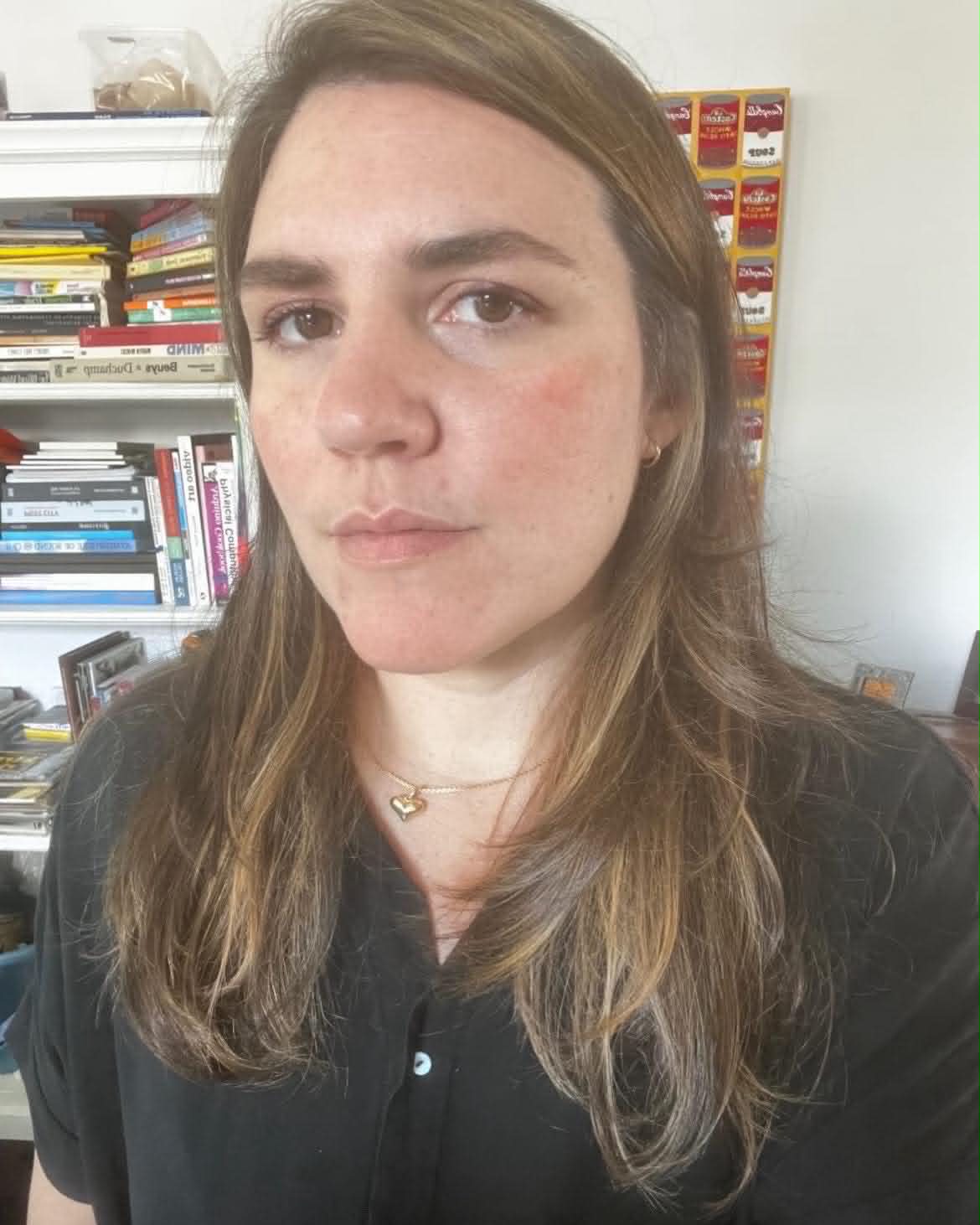
Dr Aisen Caro Chacin, artist and scholar of human informatics | Tethered: End-of-Life AI Opera
Dr Aisen Caro Chacin is a regenerating composition of cells that produce a woman, a Venezuelan, a Spaniard, a U.S. American, and an animal whose patterns of migration are not based on seasons, but rather chance, chaos, and opportunity. She is an artist and leads the Medical Prototyping Lab at the University of Texas Medical Branch and is an Assistant Professor in Pathology at the School of Medicine. She is a founding board member of the Medicine and Arts Program at the Art|Sci Center at UCLA and chaired Houston’s Leonardo LASER. She was Affiliate Faculty at the School of Art at the University of Houston, where she also received her BFA. Holds an MFA in Design and Technology from Parsons the New School, where she was a Teaching Fellow. She received her Ph.D. in Human Informatics from the University of Tsukuba, Japan. Her research and practice focus on sensory perception, the human-machine relationship, and the philosophical implications of embodiment through artificial bodies and realities in a time of conscious evolution. Her medium is the perceptual apparatus itself, and her work spans new media art, human-computer interfaces, medical devices, and Assistive Device Art.
Tethered: End-of-Life AI Opera is a performance artwork about our co-evolution with machines exploring human dependency on critical care devices to extend life. The work was born from supporting a close friend – experimental pianist Robert Pearson – during his final months with ALS in hospice care. Communicating via eye-tracking technology, Pearson contributed poetry written with his eyes, which became the opera’s libretto. The piece weaves together sound art, AI mediation, and intensive care devices to ask what it means to live tethered to a machine, and what forms of agency, intimacy, and care emerge in cohabiting life. // Feel free to visit Robert Pearson’s bandcamp: https://robertpearson.bandcamp.com/
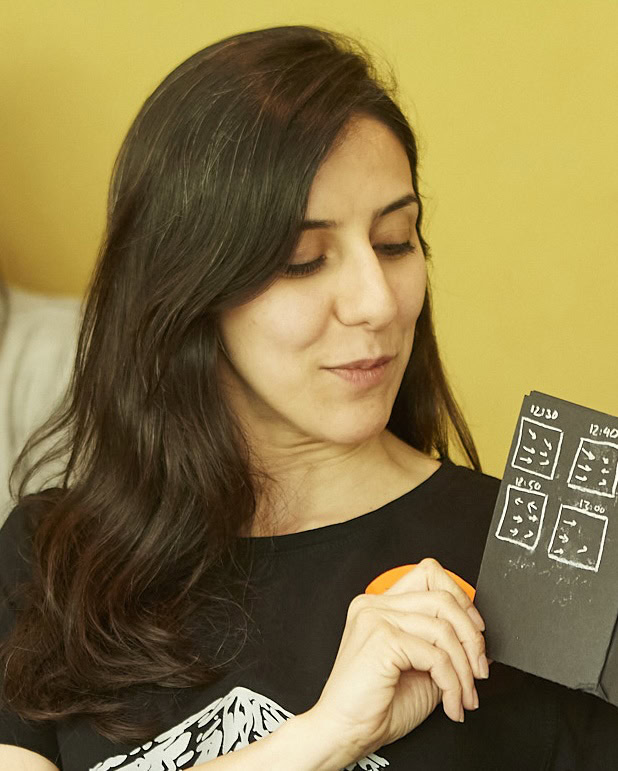
Dr Zahra Mokhtari, physicist and scholar of motion behaviour | Signals Shape Collective Behaviour. From Ant Trails to Opinion Dynamics
Dr. Zahra Mokhtari is a physicist whose research traces the boundary between individual motion and collective behavior. She got her bachelor’s degree in physics in Tehran, Iran, then moved to Vancouver, Canada for an MSc in quantum mechanics at Simon Fraser University. She completed her PhD in statistical physics at the University of Göttingen, Germany, asking a classic question in new ways: what does “more is different” actually mean, and when does it happen? Her doctoral work modeled living agents, bacteria navigating obstructed, heterogeneous environments. As a postdoc at Freie Universität Berlin, she turned to trail formation in ant colonies, studying how delayed, message-like signals can turn random motion into organized paths. She presented her works in peer-reviewed publications and presentations in international conferences such as American Physical Society (2022) and DPG spring meetings (2022, 2024). She received a Hanna Neumann Fellowship to model sheep herding using reinforcement learning. Later, as a data scientist, she applied machine learning to uncover hidden patterns in music and to optimize dynamic pricing strategies, finding unexpected structure in markets.
How do groups (ants, cells, or social media users) form coherent movements or sudden opinion shifts without a central leader? In this presentation, Zahra will walk through building an agent-based model to explore this question. Starting from biological inspiration (bacteria and ants leaving chemical trails), she shows how thousands of simulated “walkers” deposit and react to fading signals. The surprising result: a signal’s lifetime flips collective outcomes: From chaotic swarms to stable, organized trails. She then connects this model to opinion dynamics: What if tweets, headlines, or chat messages act as such volatile signals, co-evolving with the people who create and consume them? The focus is on studying “influence” when messages themselves have a life cycle.
Related
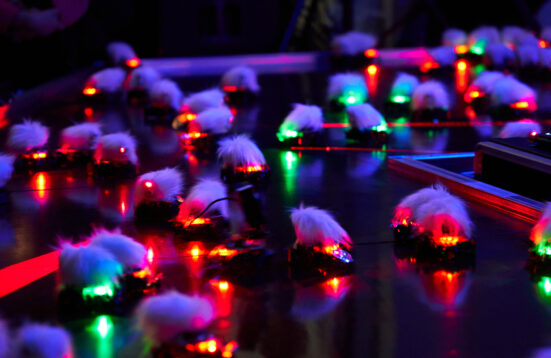
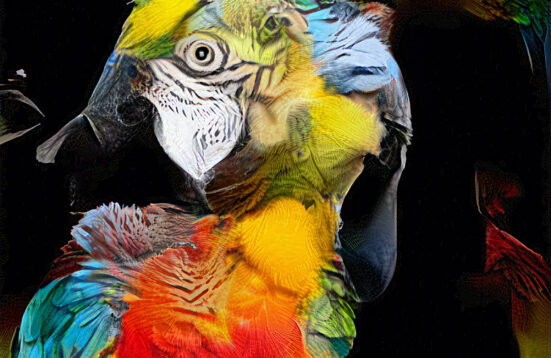
Swarms, Robots and Postnature
- Käthe Wenzel | So Kanno | Sofia Crespo
The exhibition Swarms, Robots and Postnature presents three research based artistic positions by Käthe Wenzel, So Kanno and Sofia Crespo exploring the interface of the biological and the machine, on swarm behaviour, and questioning the traditional concept of “nature”.
Read more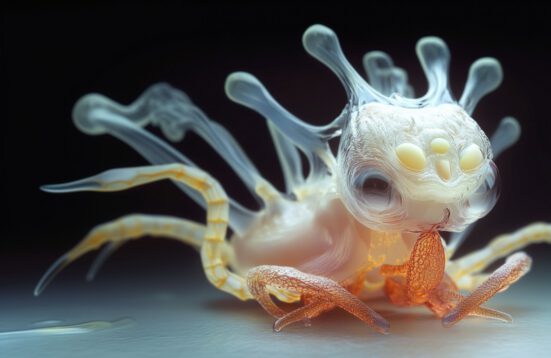
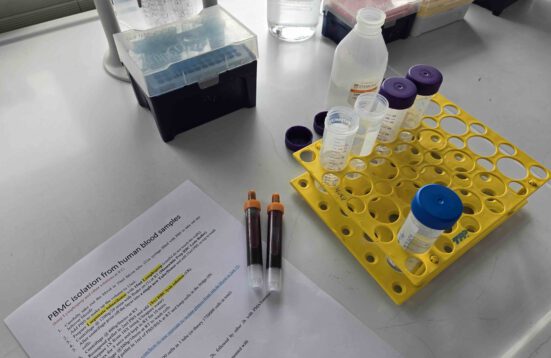
CHRYSALIS. ARTISTS IN LABS
- Berlin-based Artistic Research in Science and Technology
- With Helena Nikonole, Julius Holtz, Margherita Pevere, Marcus Maeder
ALB is initiating artist-in-lab residencies for internationally recognized, Berlin-based artists, supported by Lottostiftung Berlin. The new project is an interdisciplinary exchange between art and science in Berlin science laboratories at all three universities of Berlin, the University of the Arts Berlin, and the Charité. We expect strong outcomes in transdisciplinary knowledge transfer, artistic research, and critically highlighting 21st-century innovations.
Read more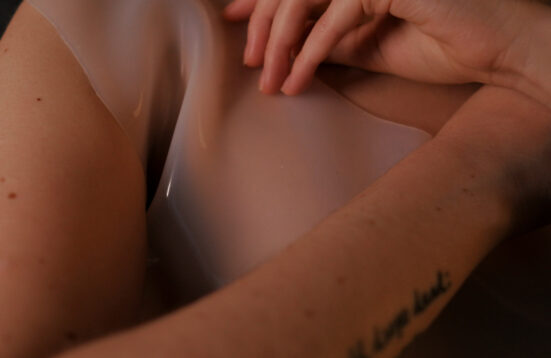
MATTER OF FLUX
- Artistic Research
- WhiteFeather Hunter | Lyndsey Walsh | Shu Lea Cheang and Ewen Chardronnet
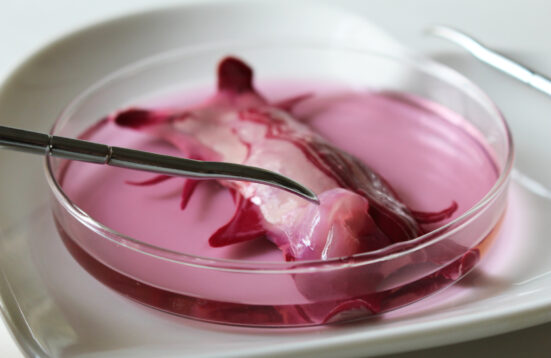
The exhibited artworks critically reflect about nature, matter, and health of female and nonbinary bodies through artistic and scientific research – exploring the use of menstrual serum for tissue culture, proposing new modes of care within the context of female and nonbinary health, and discussing both traditional forms and new possibilities of reproduction.
Read more