TOUCHING BOUNDARIES
What Drives Art and Science Collaboration
Panel Discussion | With Špela Petrič, Markus Maeder, Miha Turšič, Matthias Rillig, Regine Rapp, and Christian de Lutz
The encounter of scientific research and artistic intelligence produces new ways of seeing science, art and life, creating value in labs and beyond. Join the conversation with international scientist, artists, art science mentors, and art theoreticians at the Berlin Science Week at the Haus der Kulturen der Welt (Safi Faye Saal).
A Conversation with
Dr Špela Petrič, artist and researcher, bio artist and researcher with background in Biochemistry, Ljubljana/Amsterdam
Prof Dr Markus Maeder, artist, researcher, composer, and scientist in Environmental Systems
Miha Turšič, Space Lab Leader, Waag Society, Amsterdam
Prof Dr Matthias Rillig, head of the Lab ‘Ecology of Plants’, Freie Universität Berlin
Regine Rapp, art historian, curator, co-Director of Art Laboratory Berlin
Christian de Lutz, curator, researcher, co-director of Art Laboratory Berlin
While it is becoming more common to invite artists in laboratories, with the goal of furthering science communication of driving innovation, it is important to note that an “artist is not primarily in a scientific lab to perform outreach activities for lab’s research or illustrate and communicate scientific research results, even though this can also be an outcome. The artist is a researcher in the arts. Remember, while ‘the means’ or the process may be the same, and the goals may also include to arrive at new insights, the product may take many different forms.”(1) Whatever the structure of an artist and scientist collaboration there is likely to be points where these two very different forms of research converge and diverge, creating frictions that have the potential to expand results in both fields. What is the human role in these collaborations both inside the lab and further afield? How do these collaborations effect stakeholders, including policymakers and the public?
Our panel will discuss how the encounter of scientific research and artistic intelligence produces new ways of viewing science, art and life. Made up of artists, scientists, artist-scientists, art theoreticians, and curators the panel will explore how curiosity driven research in both fields has multiple forms of value both in the lab and beyond. We will also talk about the dual and hybrid epistemologies that arise from the process, and also try to answer the question: “Who gets to wonder” how borders and backgrounds define the possibility of inquiry.
Information about the speakers
Our speakers include Dr Špela Petrič, an artist working with living materials, especially plants, machine learning, and agricultural systems, who has a dual background – a PhD in biochemistry and an MA in Media Arts.
Also on the panel will be Prof Dr Markus Maeder, an artist, researcher, and composer of electronic music who has a PhD in Environmental Systems Science, currently Art Professor at the Lucerne University of Applied Sciences and Art.
Miha Turšič studied Industrial Design in Ljubljana and currently works at the Waag Future Lab in Amsterdam as the Space Lab lead, as well as a concept and project developer. He focuses on international collaboration and initiates projects that explore themes such as art-science, space art and culture, planetarity, biotechnology, digital fabrication, and open-source hardware.
Another speaker will be Prof Dr Matthias Rillig, head of the research group ‘Ecology of Plants’ at the Institute of Biology at the Freie Universität Berlin. In his scientific work, he investigates the symbiosis of mycorrhizal fungi with plants as well as the effects of the Global Change on soil processes and soil biodiversity.
Finally, Regine Rapp, art historian and curator, and Christian de Lutz, curator and researcher, who have co-directed and conceptualised Art Laboratory Berlin for 20 years will not only moderate the program but contribute to the discussion from curatorial and hybrid art related perspectives.
********
(1) Rillig, M.C., Bonneval, K., de Lutz, C., Lehmann, J., Mansour, I., Rapp, R. et al. (2021) ‘Ten simple rules for hosting artists in a scientific lab’, PLoS Computational Biology, 17(2), e1008675. doi: 10.1371/journal.pcbi.1008675.
More information on the research project CHRYSALIS. ARTISTS IN LABS: https://artlaboratory-berlin.org/research/chrysalis-artists-in-labs/
Venue
BERLIN SCIENCE WEEK
Safi Faye Hall
Haus der Kulturen de Welt (HKW)
John-Foster-Dulles-Allee 10,
10557 Berlin
Date and time
Sat, 7 November 2026, 2:30 – 4 pm
HKW, Safi Faye Hall!
REGISTRATION
Free entry
More information here
CONCEPT
Regine Rapp & Christian de Lutz
Cooperation partners
Supported by

Part of the research project:
Related
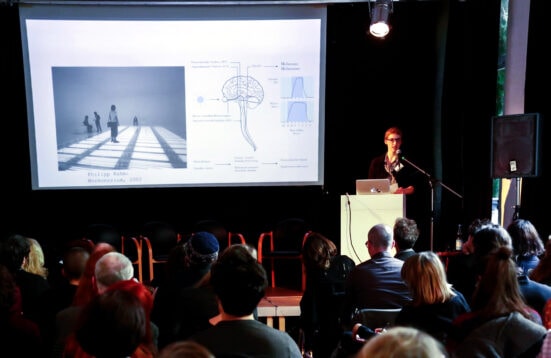
Nonhuman Agents in Art, Culture and Theory
- Conference Publication | Video Documentation
This publication documents all conference talks by artists, scholars from humanities and science as video recordings. The event critically questioned anthropocentrism, redefined animal and plant intelligence, their agency and sentience in radically cross-disciplinary formats.
Read more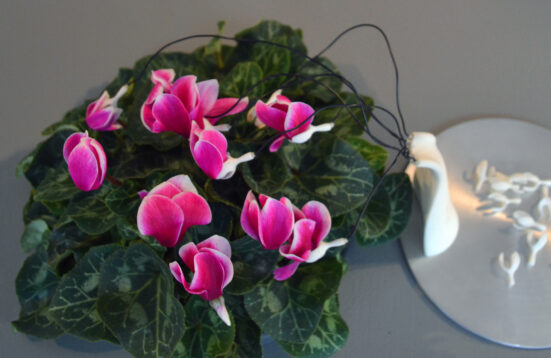
Strange Encounters with Vegetal Others
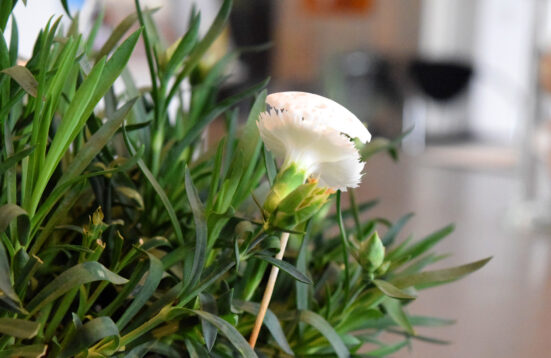
- Špela Petrič
The epistemological approaches of hybrid art and biochemistry inform the work of artist Špela Petrič with the Plant Kingdom as part of a multi-species collaboration. She explores the ontologies, methodologies, ethics and practices of care involved in our relationship to the vegetal.
Read more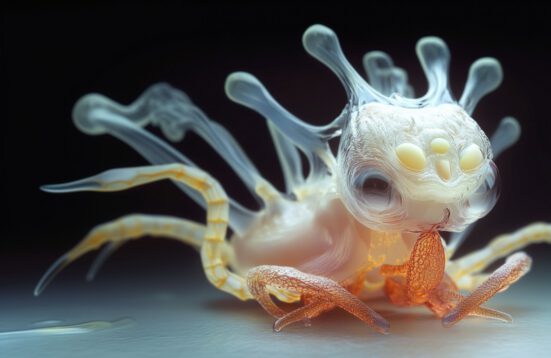
CHRYSALIS. ARTISTS IN LABS
- Berlin-based Artistic Research in Science and Technology
- With Helena Nikonole, Julius Holtz, Margherita Pevere, Marcus Maeder
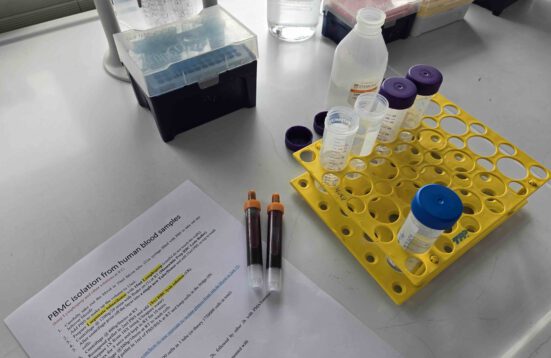
ALB is initiating artist-in-lab residencies for internationally recognized, Berlin-based artists, supported by Lottostiftung Berlin. The new project is an interdisciplinary exchange between art and science in Berlin science laboratories at all three universities of Berlin, the University of the Arts Berlin, and the Charité. We expect strong outcomes in transdisciplinary knowledge transfer, artistic research, and critically highlighting 21st-century innovations.
Read more