 event | Residency
- Artist Residency
- Karolina Żyniewicz
10 January - 15 February 2022
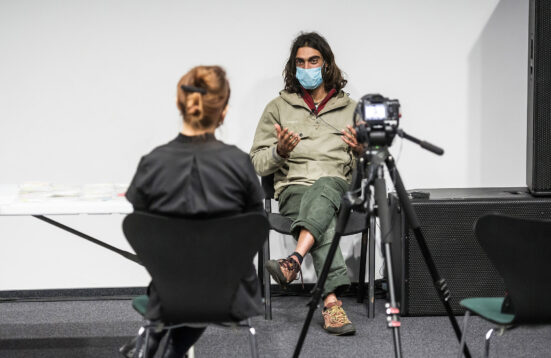
During her residency at ALB artist Karolina Żyniewicz will use the exhibition space for her new project “Signs of the Times”: After having collecting numerous masks in Berlin, the artists started to interview people and communicate with them about their individual mask experience.
 event | Talk
- Living with the Virus
- Online Talk | Caitlin Berrigan, WhiteFeather Hunter, Sebastian Cocioba
18 November 2021
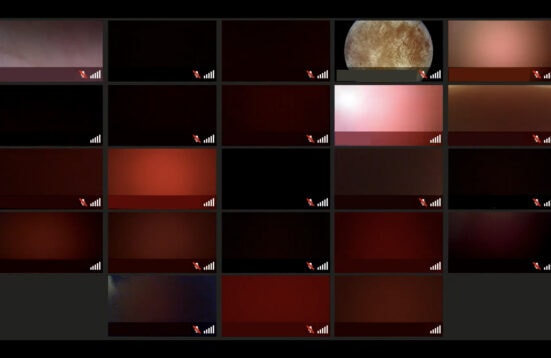
As we face the prospect of the SarsCov-2 virus becoming endemic for the foreseeable future we ask what does “Living with the Virus” mean for us and individuals and as a society. We have asked three artists working at the borders of art and the life sciences to talk about how viral infection, contagion and potential cure has affected their lives and work.
 event | Talk
- Viral Geographies
- Online Talk | Sybille Neumeyer, Karolina Żyniewicz
25 November 2021
The event explores the biopolitics in our current age of pandemic. The online discussion welcomes artists Sybille Neumeyer and Karolina Żyniewicz to talk about their artistic research focusing on the virus in general as well as the impact of the current pandemic in their artistic practice.
 event | Walk & Talk
- Walk & Talk
- With members of the art science collective
31 October 2021
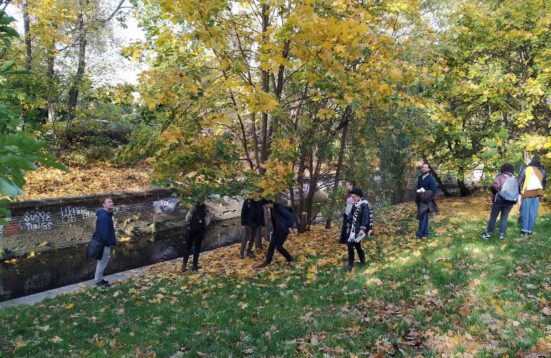
Members of the collective will meet for a walk along the Panke river, together with the public, to talk about their previous research on the river, its flora, fauna and ecologies. We will also give a preview of our upcoming DIY/ DIWO program for 2022.
 event | Talk
- Art & Science Talk | Marta de Menezes & Luís Graça
30 October 2021
In the talk the artist Marta de Menezes and the scientist Luís Graça will give insights into their collaborative art-science projects, currently on show at Art Laboratory Berlin in the exhibition “Paired Immunity”. In “Immortality for Two”, they questioned the limits and understanding of their identity. In “Anti-Marta” a skin transplant was exchanged between them.
 event | Talk, Workshop
- in cooperation with Rüdiger Trojok
24 - 26 January 2014
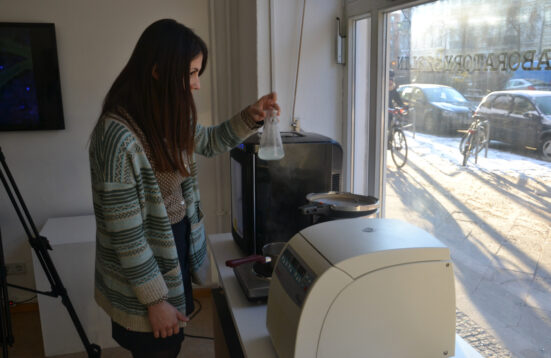
To open our 2014 programme Art Laboratory Berlin will be presenting three days of events on open source biology and micro-organisms organized with Rüdiger Trojok and in connection with the transmediale and CTM festivals
 event | Talk
- Integrating Nature's elegant solutions into the design process
- Dr. Prateep Beed
27 June 2014
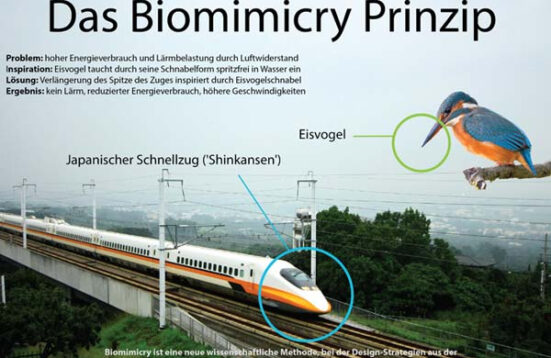
Biomimicry is a creative method for sustainable innovation and product design in today’s world.
 event | Talk
- with Berlin iGEM team
31 January 2016
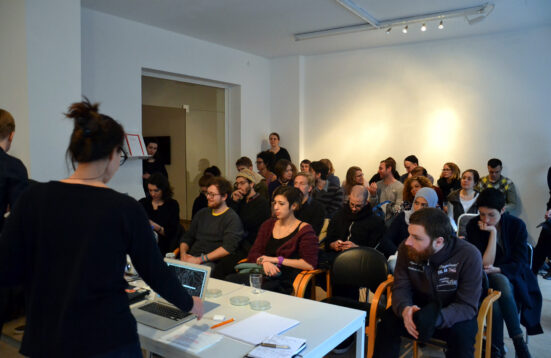
The iGEM Berlin team (http://igem.berlin/) presents their fourth SciArt Café. Under the main theme of “Programming Life – Good Code/ Bad Code?” we will hear scientists and artists working with bioscience and afterwards discuss topics of synthetic biology.
Read More
 event | Conference, Talk
- Living Systems | Aquatic Systems
- Robertina Šebjanič, Kat Austen, Regine Rapp and Christian de Lutz
18 September 2016
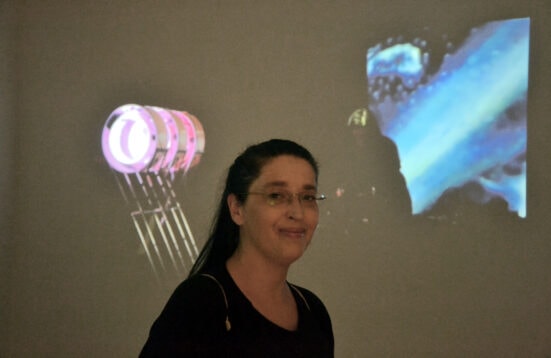
In this seminar we want to invite you to theoretically explore these and other aspects about artistic and scientific methodologies on interspecies empathy and human-nonhuman companionship.
Read More
 event | Talk, Workshop
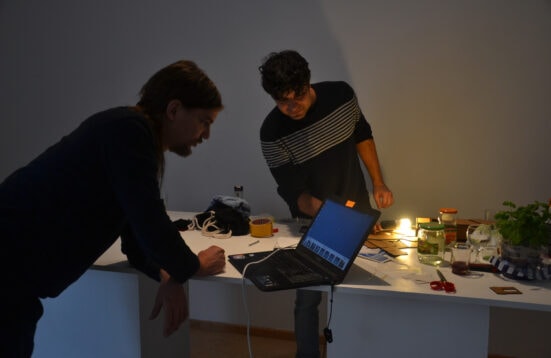
- DIYBio faire
- Biotinkering e.V.
17 - 19 February 2017
The three-day bio-fair brings together the players in the Berlin biohacking scene for a series of hands-on workshops, talks and a special exhibition featuring unique DIY laboratory equipment.
Read More
 event | Performance, Talk, Workshop
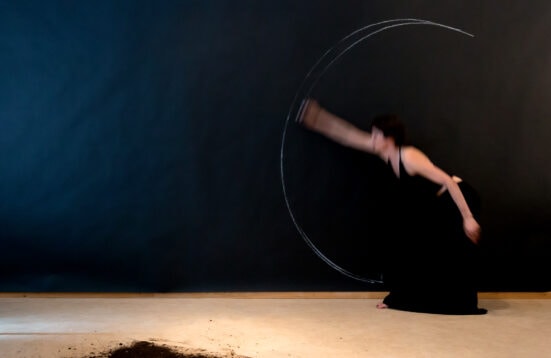
- Anatomy of an inter-connected system
- Margherita Pevere
15 July 2017
Starting point is the artist’s research at the junction of visual arts, theoretical inquiry and investigation of biological processes, focusing on the discourses regarding human-nature relationship in the frame of today’s environmental crisis and how artistic practices…
Read More
 event | Workshop
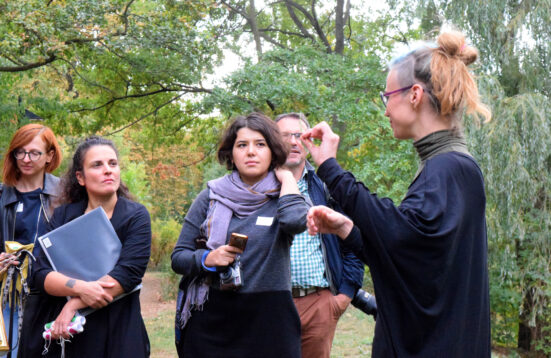
- Prototyping tools for the investigation of plant governance
- Špela Petrič
22 September 2018
As part of the inquiries into Vegetal Otherness, Špela Petrič set out to produce her own phytocracy-revealing onto-epistemological tools that are inspired by actual institutions/domains/cultural practices framing plant-people relations…
Read More
 event | Conference
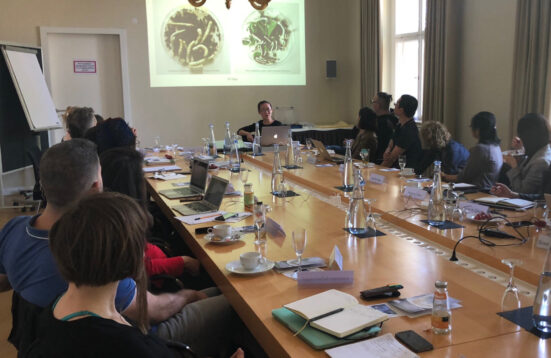
- The Agricultural Treatise as Source and Scrutiny for Creating an Artist Book
- Vivan Xu | Lisa Onaga | Dagmar Schäfer | Regine Rapp | Anna Grasskamp | Yubin Shen
4 July 2019
This one-day symposium discusses how the lens of contemporary art can engage with the genre of the agricultural treatises and manuals that have long attracted the attention of scholars in the history of science.
Read More
 event | Talk
- Artist and scholar talk
- Vivian Xu and Lisa Onaga
30 June 2019
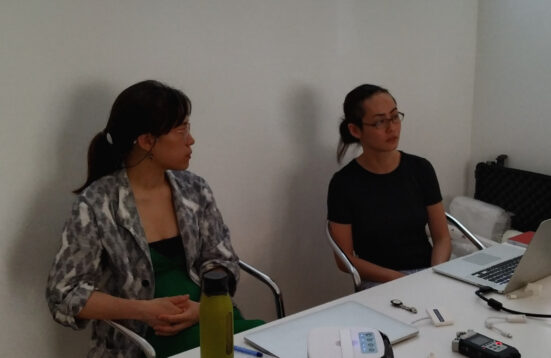
“Conversations in Silk” presents a dialogue between historian of biology Lisa Onaga and artist and designer Vivian Xu reflecting on the intermingled topics of silk, sericulture, and specultations of the future of the silkworm-human relations within a technoscience framework.
Read More
 event | Workshop
- Vivian Xu
8 June 2019
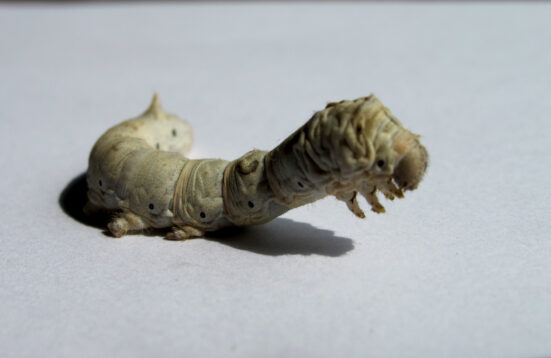
The Silkworm Project Workshop gives insight into the artistic research and practice by Vivian Xu and offers a hands-on part, based on the artist’s at ALB of the same name. Participants were each given silkworms to take home and raise, hand-reared by the artist in Berlin.
Read More