CHRYSALIS. ARTISTS IN LABS
Berlin-based Artistic Research in Science and Technology
With Helena Nikonole, Julius Holtz, Margherita Pevere, Marcus Maeder
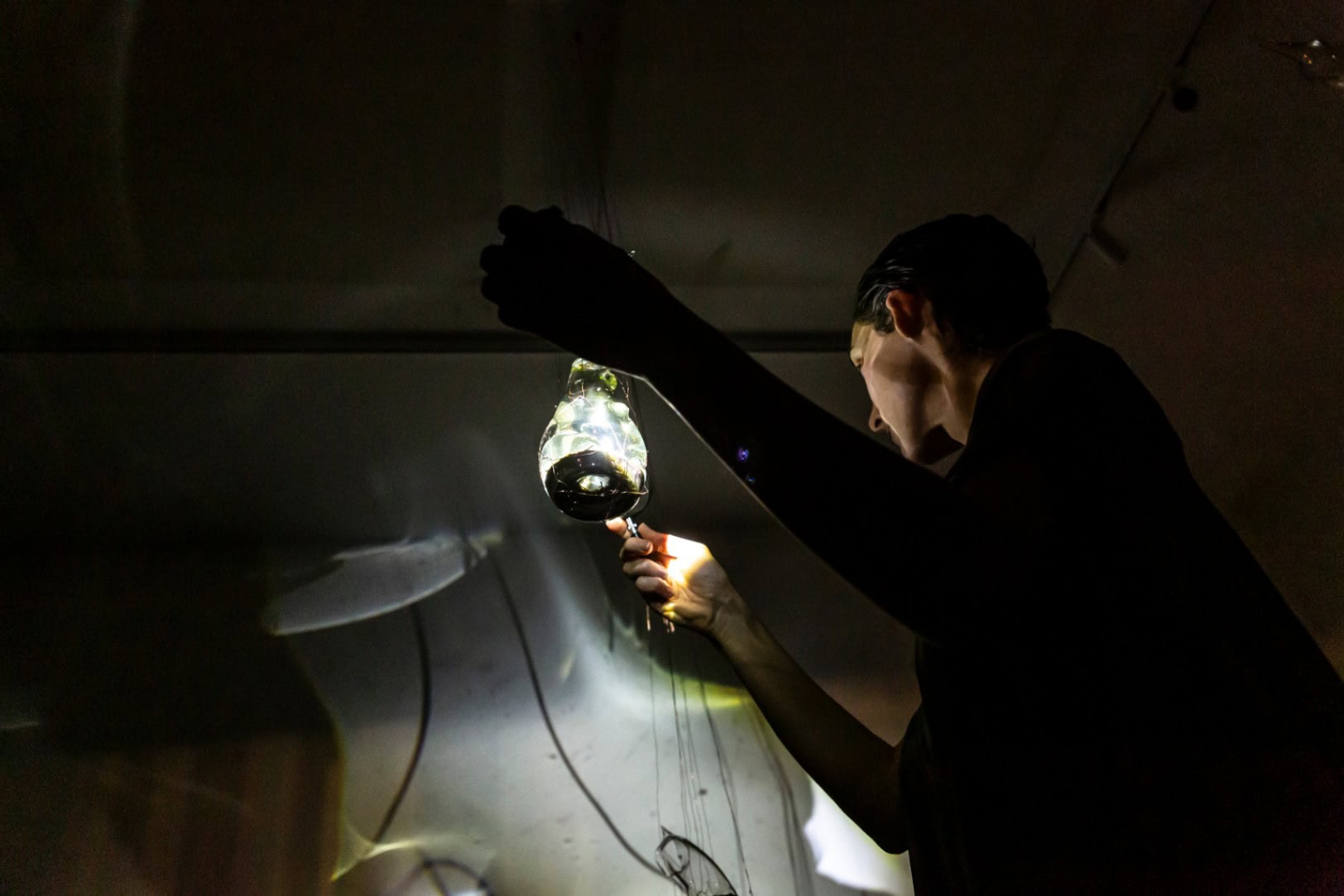
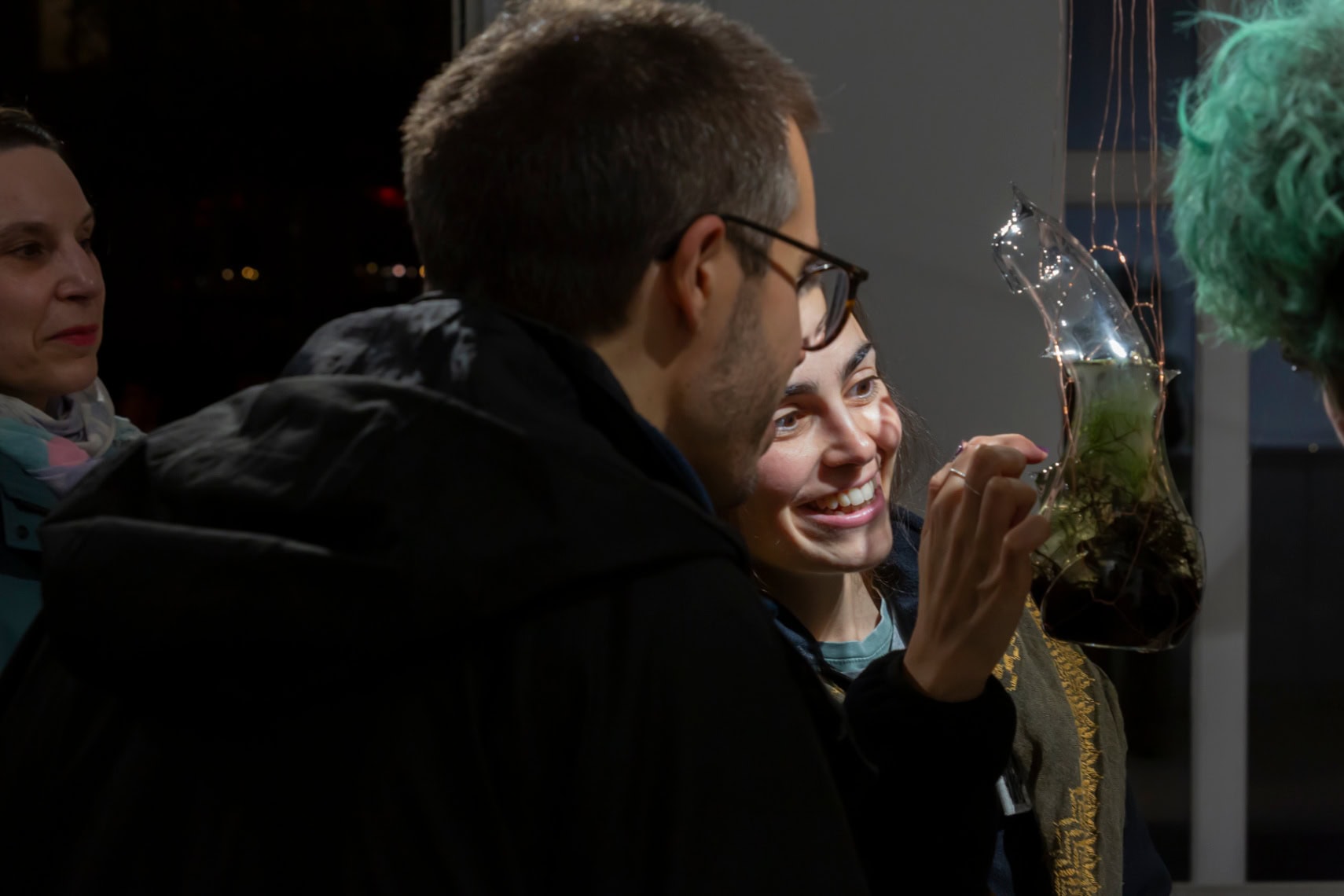
During 2025 and 2026 Art Laboratory Berlin has carried out a new innovative project CHRYSALIS. ARTISTS IN LABS with interdisciplinary exchange between art and science in Berlin science laboratories, kindly supported by Lottostiftung Berlin. In collaboration with a consortium of scientists from the Freie Universität Berlin, Humboldt-Universität zu Berlin, Technische Universität Berlin, University of the Arts Berlin, the Charité and the Bernstein Center for Computational Neuroscience, Art Laboratory Berlin invited selected artists for lab residencies in Berlin science laboratories. The group exhibition (shown at two venues: Prinzenallee 34 and Prinzenallee 29) premieres brand new works and shares research material of artistic and scientific research (CHRYSALIS conference on Sat, 28 November 2026).
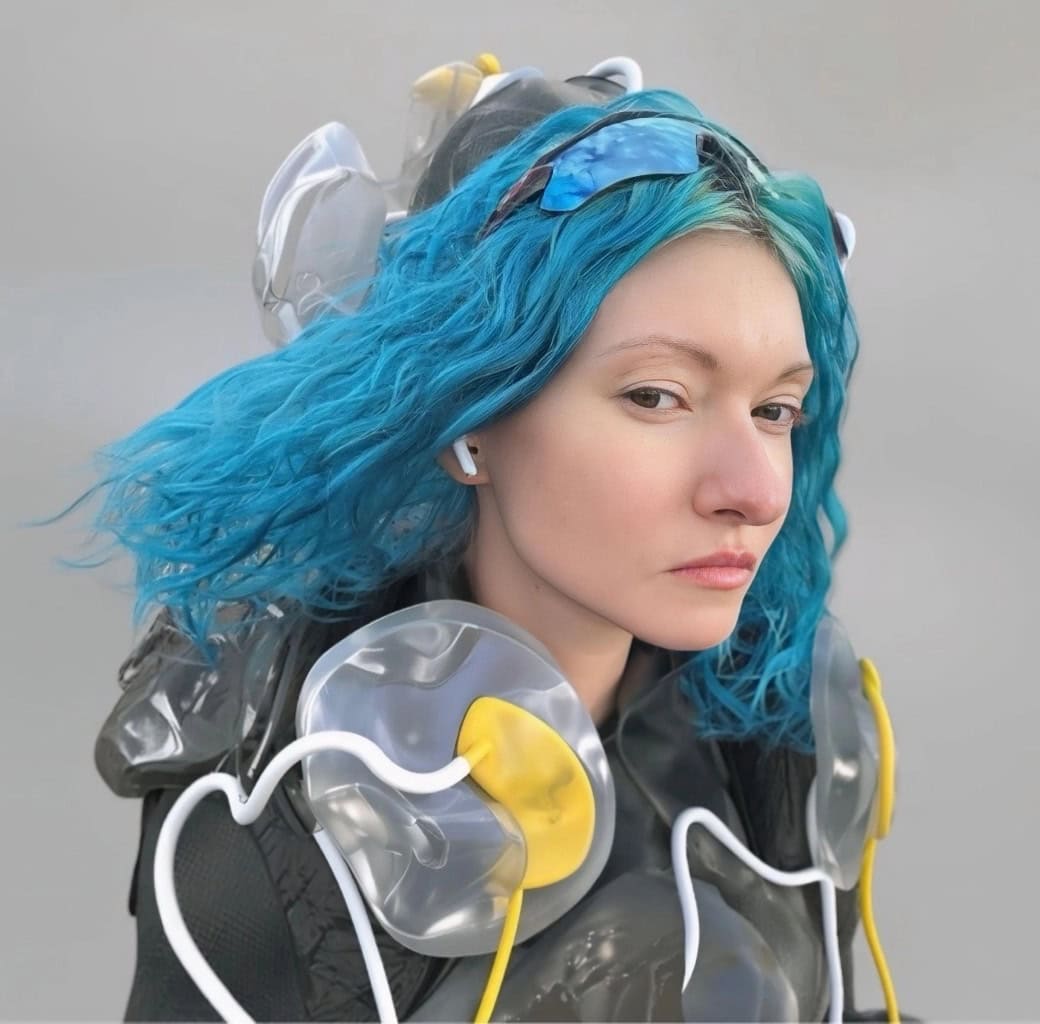
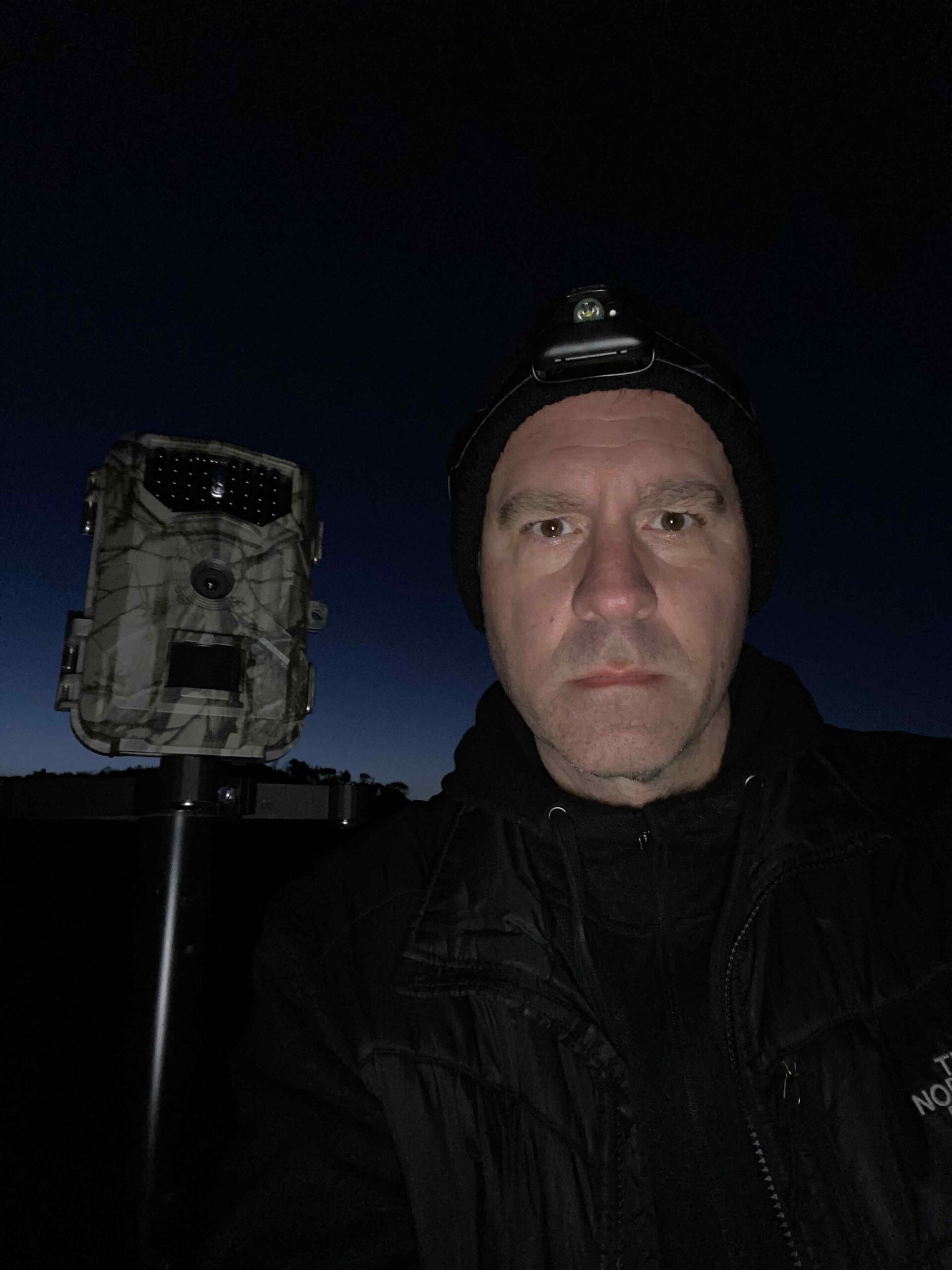
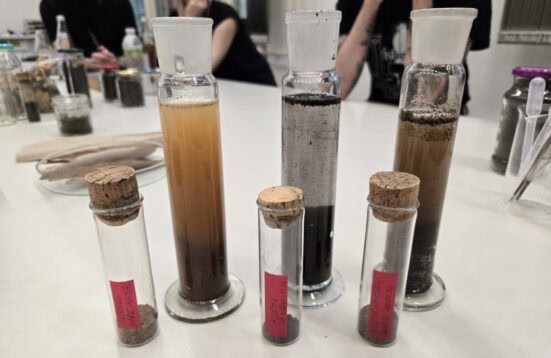
Helena Nikonole’s project SonoMetagenomics (2026) brings research in bioacoustics and speculative evolution into dialogue with metagenomic soil ecology to investigate how sound and vibration may act as environmental pressures shaping soil microbial communities. The installation is an artistic representation of a scientific experiment being developed by the artist in collaboration with scientist Álvaro Rodríguez del Río from the Rillig Lab | Ecology of Plants, FU Berlin. It translates the experimental setup into two soil-filled bioreactors activated by transducers. One reproduces construction noise, while the other expands the experiment into a speculative range of acoustic environments, from military and industrial machinery to natural sounds. By bringing anthropogenic, technological, and nonhuman soundscapes into contact with soil, the work explores their potential to alter microbial systems. The project is particularly interested in antibiotic resistance genes and potential antimicrobial functions. It asks whether acoustic stress can reveal otherwise hidden biological processes and contribute to understanding how evolutionary trajectories emerge within complex microbial ecosystems.
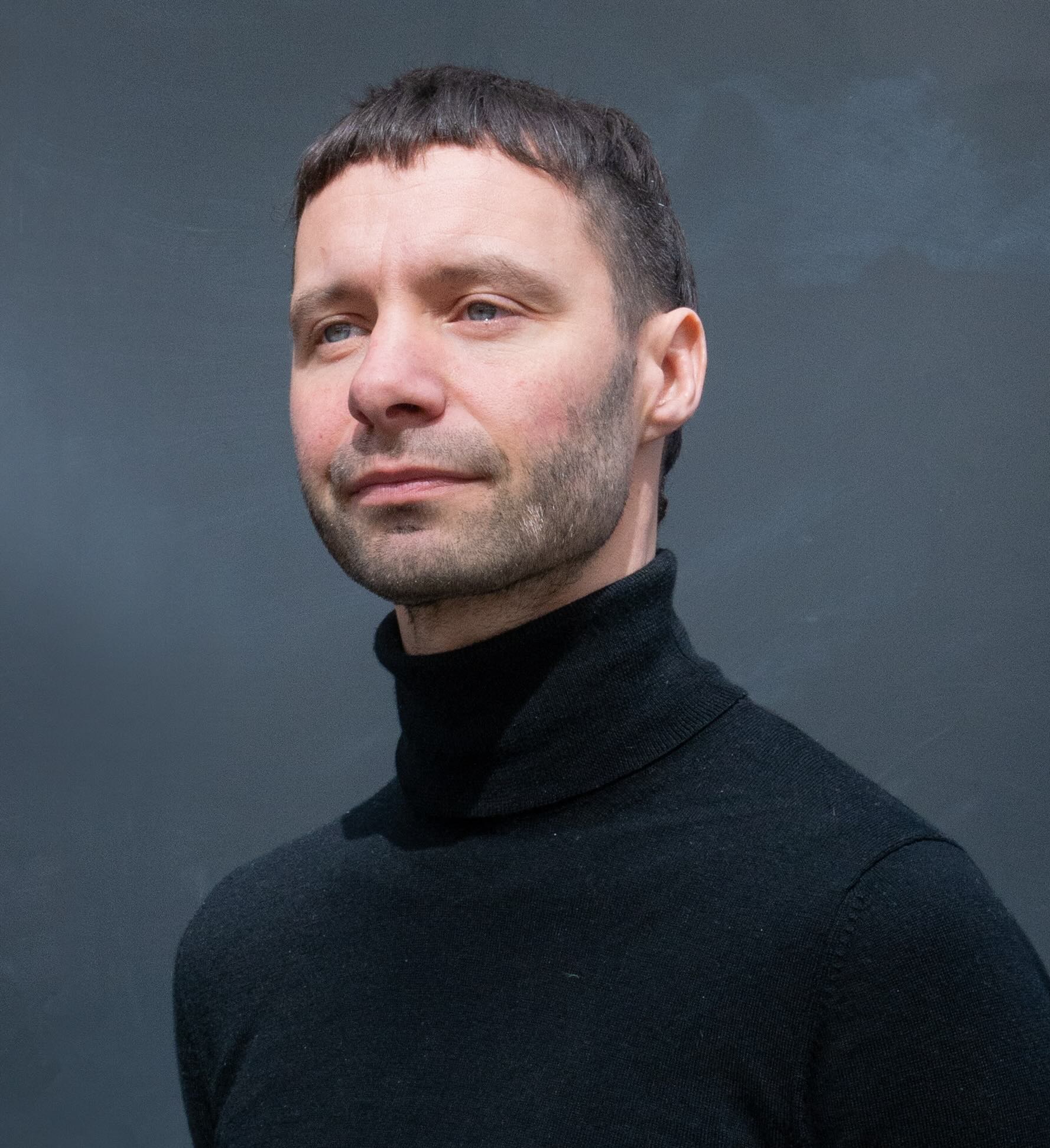
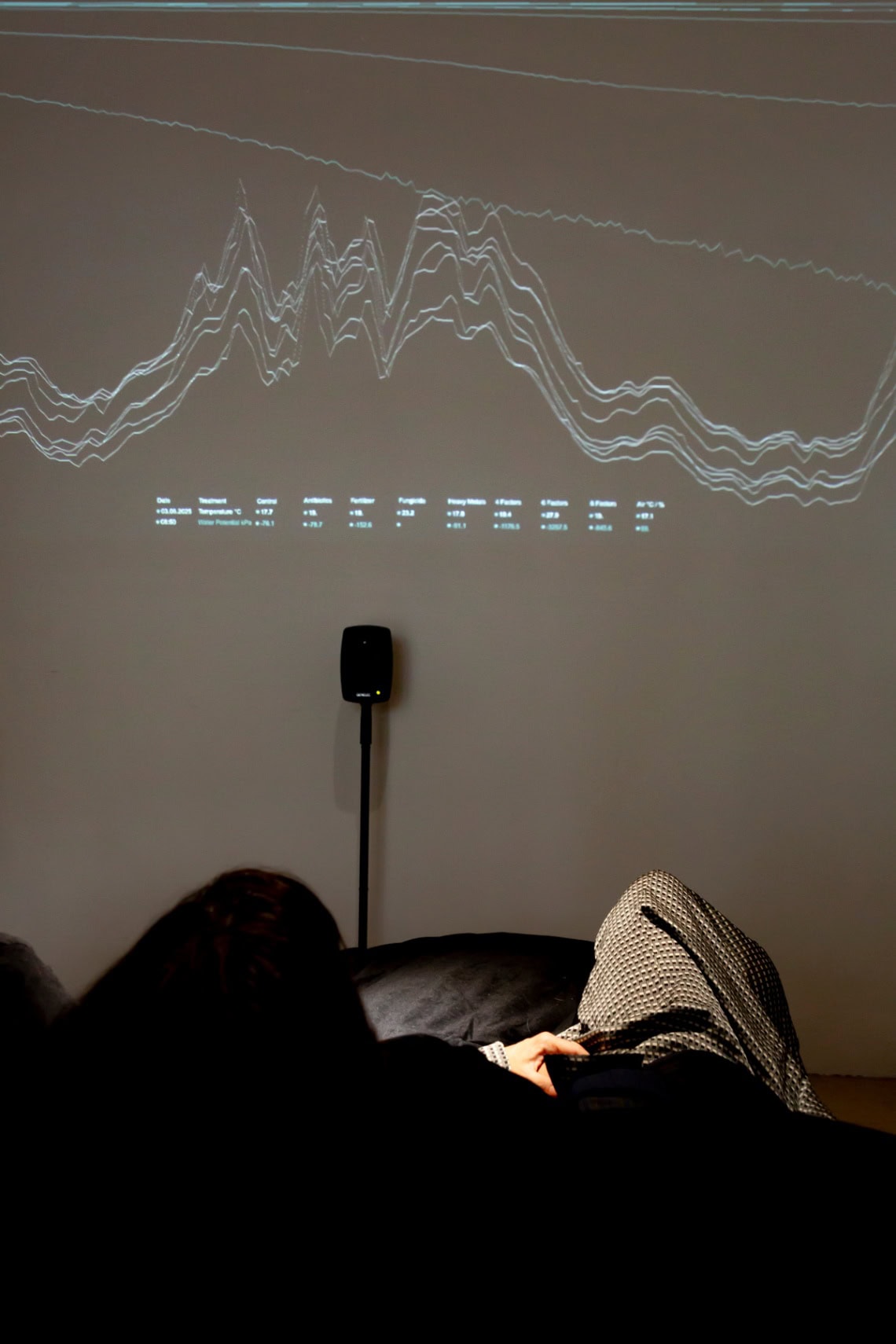
In the new generative audiovisual installation COMMON GROUND (2026), Julius Holtz operates at the intersection of neuro art, perception psychology, and sound art. A brain-computer interface (BCI) captures a visitor’s neural activity in real time and translates it into generative sound and video projections – elements that are in a constant state of flux. For his artistic research, Holtz spent time in various laboratories, most notably the sleep laboratory at Charité Berlin. This new work explores synchronization as a fundamental principle of tuning in and aligning. A high-resolution quadraphonic speaker system creates a spatial sound environment that can be experienced not only aurally but also physically. Simultaneously, the projection visualizes the EEG data and the continuous fluctuations in neural activity. The generative work establishes a perceptual feedback loop between the artwork and the person wearing the BCI. At the same time, everyone present both influences and perceives the shared sensory environment. COMMON GROUND defines the exhibition space as a speculative model of human-machine interaction.
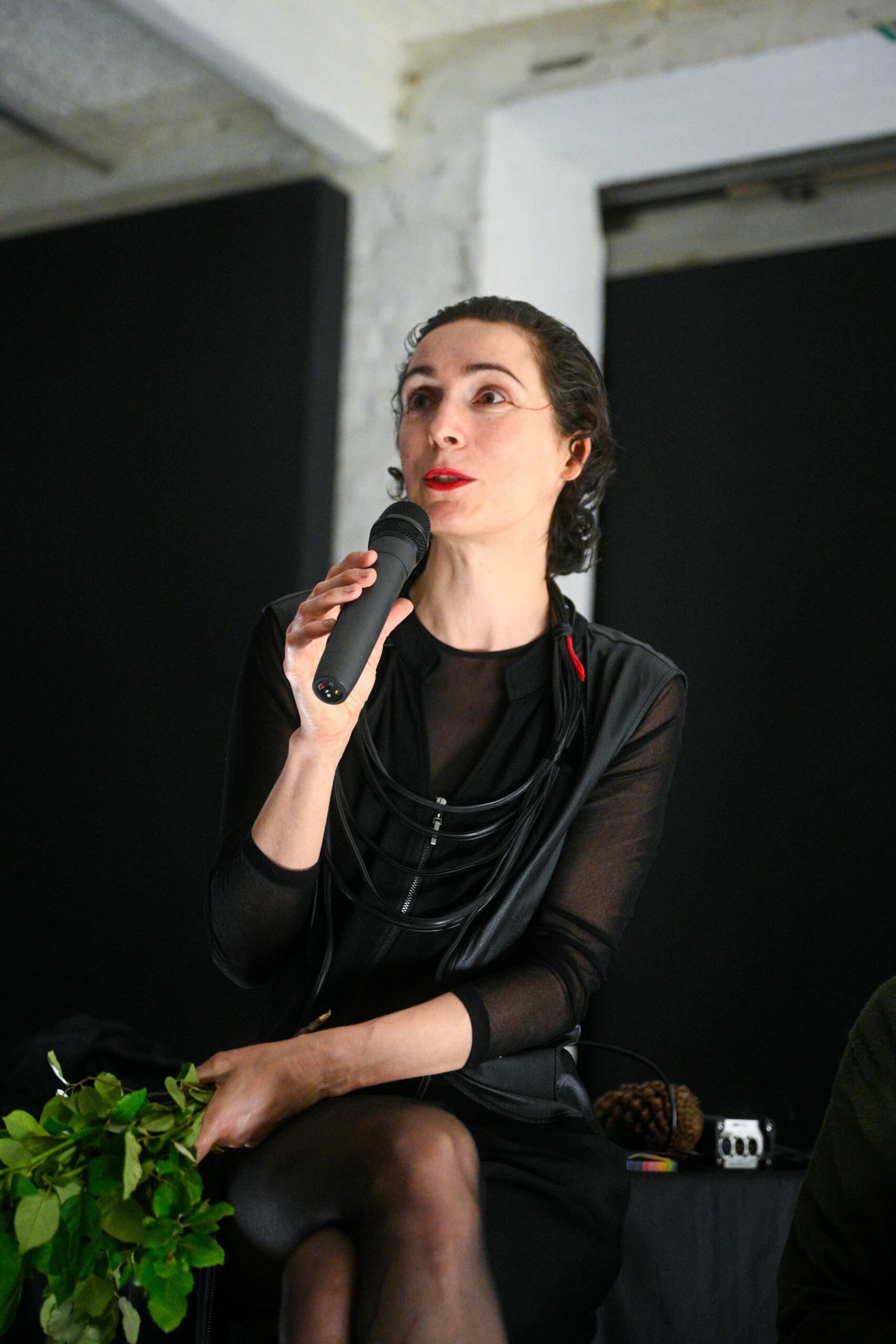
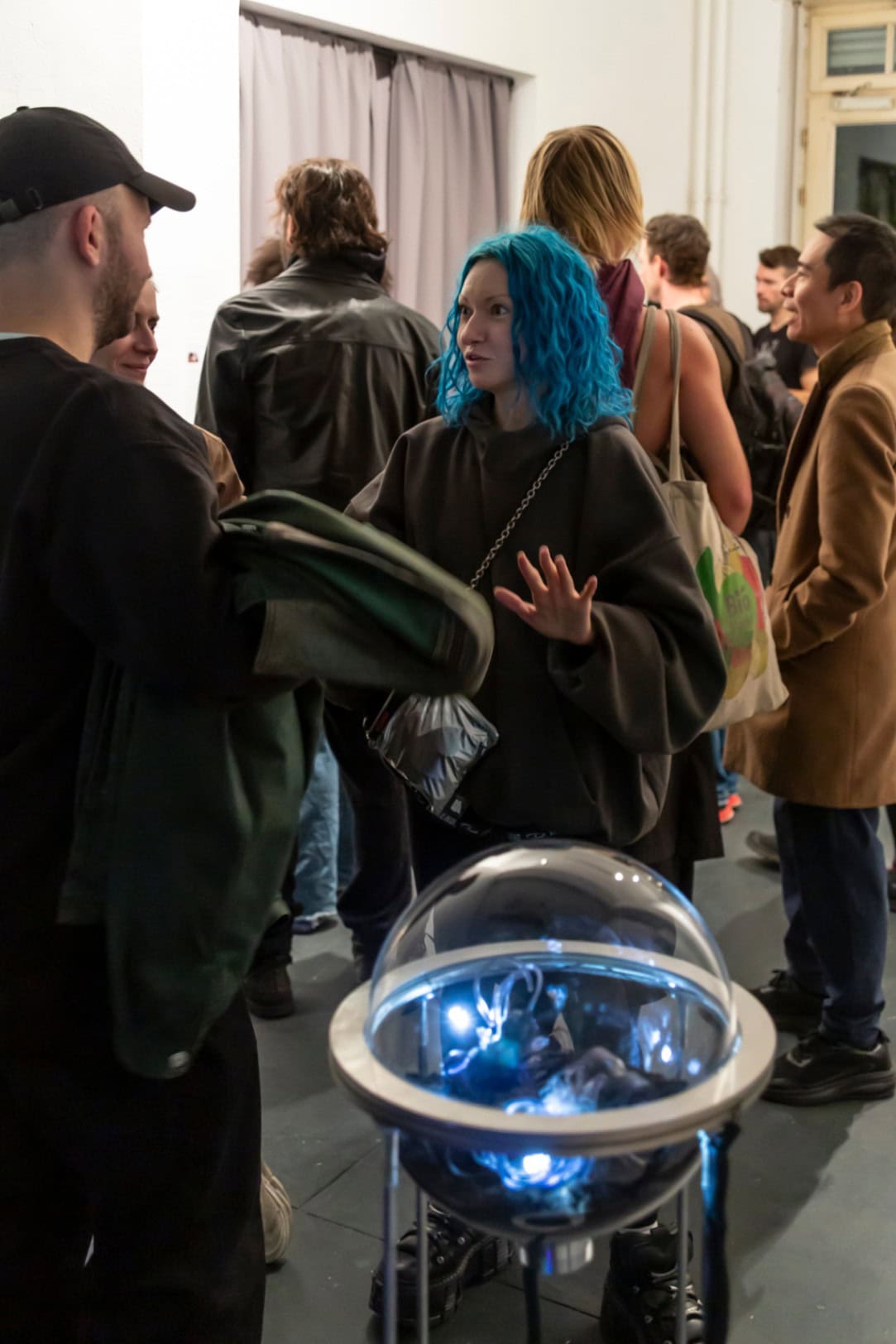
Ode (2026) by Margherita Pevere imagines urban ponds as spaceships undertaking a mission that, concealed by their apparent stillness, remains enigmatic to humans. Interconnected elements, inspired by the anatomy of pond organisms, shape a contemplative microcosmos. By combining bioinformatics with living samples from Berlin urban ponds, music, sculptural glass, garments, and sound objects, the artwork summons the liveliness of the spaceships. Pevere envisioned the spaceship concept during fieldwork with POUNDER researchers (Jeschke Lab | Ecological Novelty, FU Berlin, IGB, ARL Hannover), who sample pond waters to extract genetic data of bacteria inhabiting them, also known as environmental DNA metabarcoding. Ode manifests actual genetic material and datasets from Berlin ponds as a multidimensional repository of ecological relationships and (im)possible adaptations to contaminants. A suspended sound sculpture gives voice to bacterial networks through recordings created by singer Dorian Wood for specific bacteria. The voices overlap, dance, and eclipse in a choral piece thanks to a custom AI system that links bacterial genetic data to known pollutants. Activated by an opening performance, Ode invites audiences aboard the spaceship. The new artwork belongs to Pevere’s series untaming death that explores more-than-human perspectives on death and ecological change.
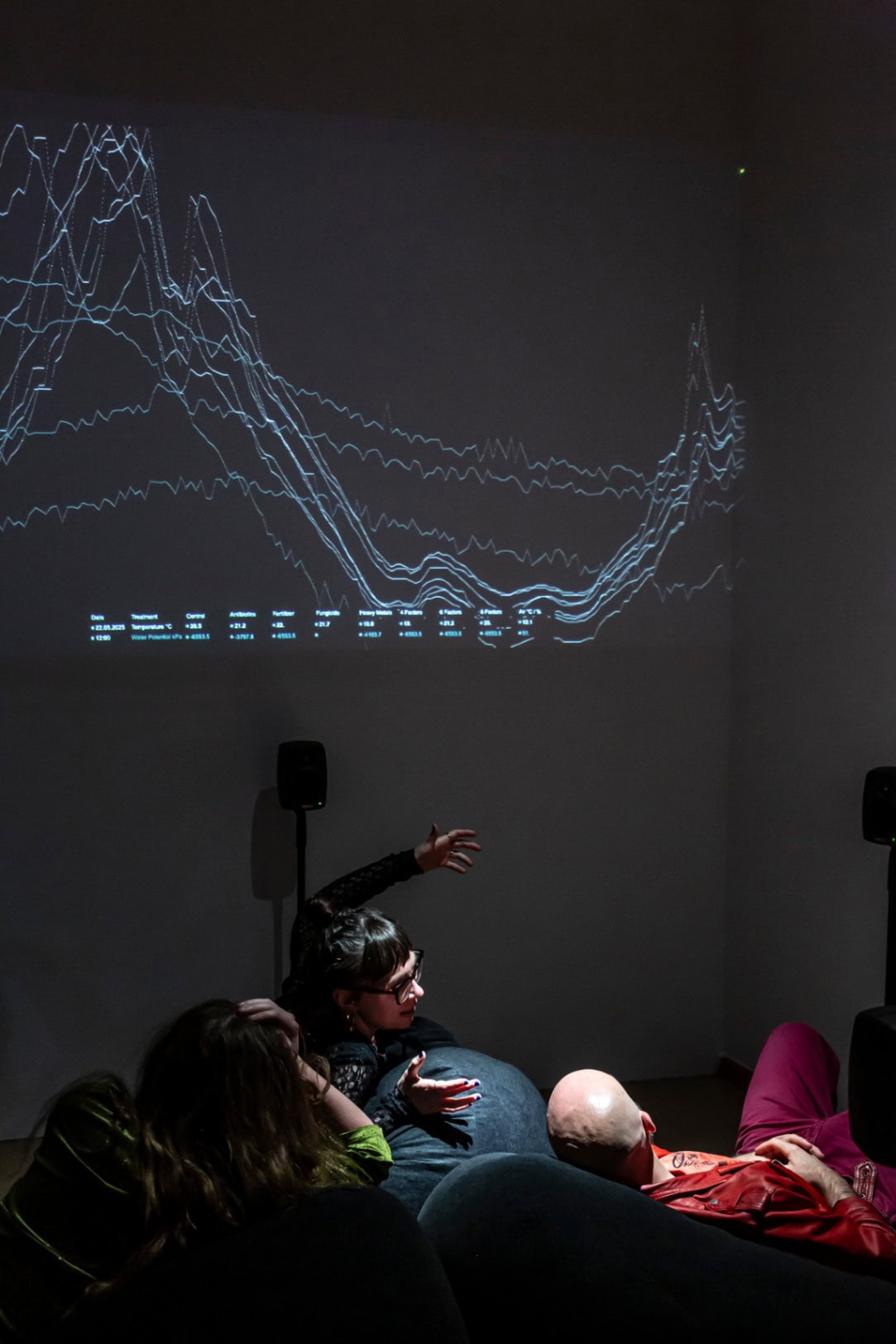
Marcus Maeder‘s sound installation Change Factors (2026) sonifies soil microclimate data from a scientific experiment on multiple global change factors that has been carried out at the Rillig Lab | Ecology of Plants, Institute of Biology, Freie Universität Berlin since 2019. For the installation Maeder has turned belowground temperature and humidity dynamics into audible, spatial sound. Drawing on findings that combining stressors like microplastic, pesticides, drought, and heavy metals produces emergent effects unpredictable from single factors alone, the piece treats these interactions as sonic phenomena. Seven treated soil plots each contribute a low-frequency moisture sound and a high-frequency temperature sound, distributed across a spatial audio system, while air temperature circles the speaker array every twenty-four hours, accelerated tenfold for perceptibility. Recordings of soil animals – crawling, feeding, vibrational communication – grow muffled as rising temperatures drive them into deeper, cooler layers. Through slow, evolving pulsations and pitch shifts, the installation reveals soil as a dynamic, reactive medium rather than inert substrate, inviting deep listening to ecosystems shaped by human land use and differing rhythms of ecological time.
Photos of the Exhibition Opening Night
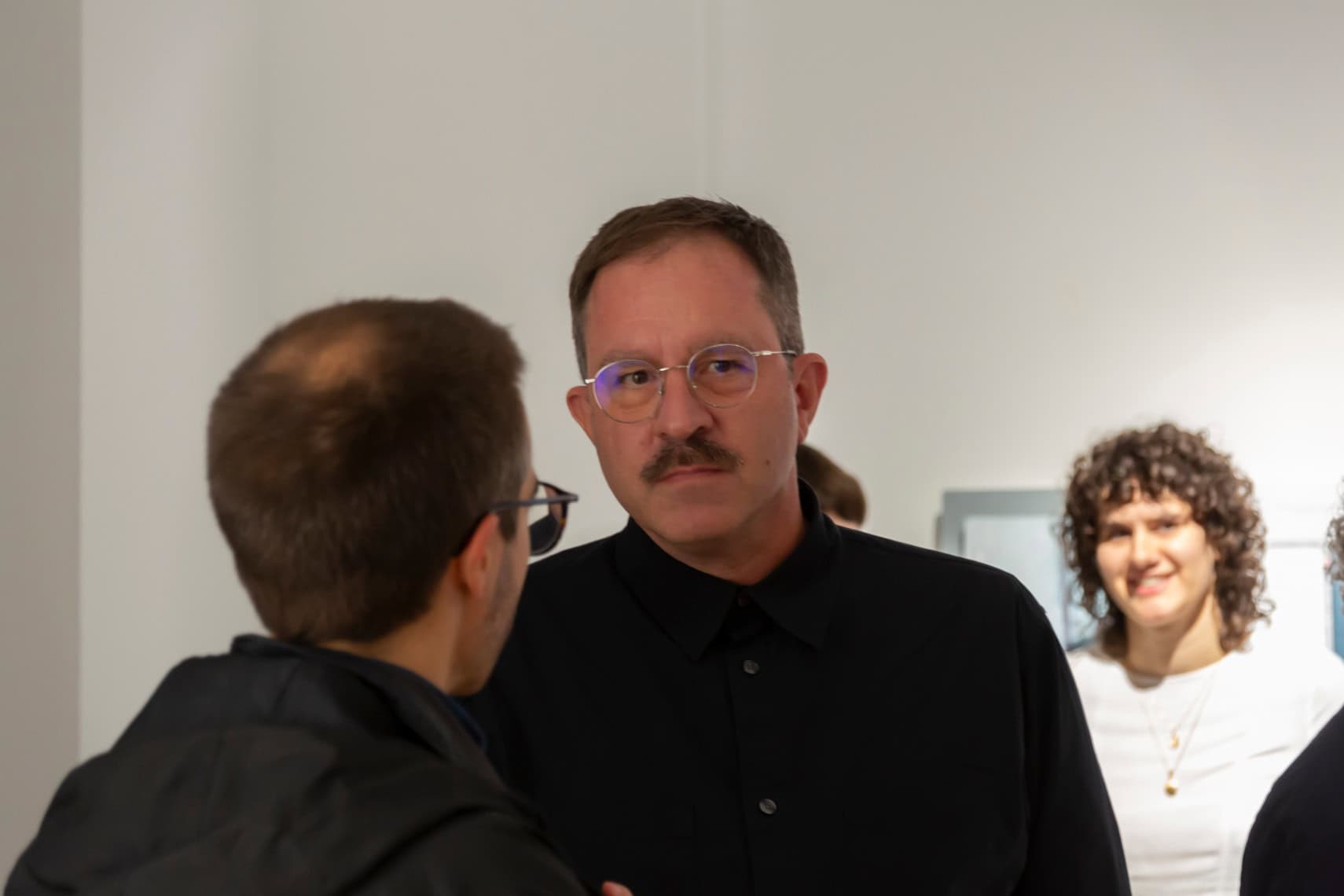
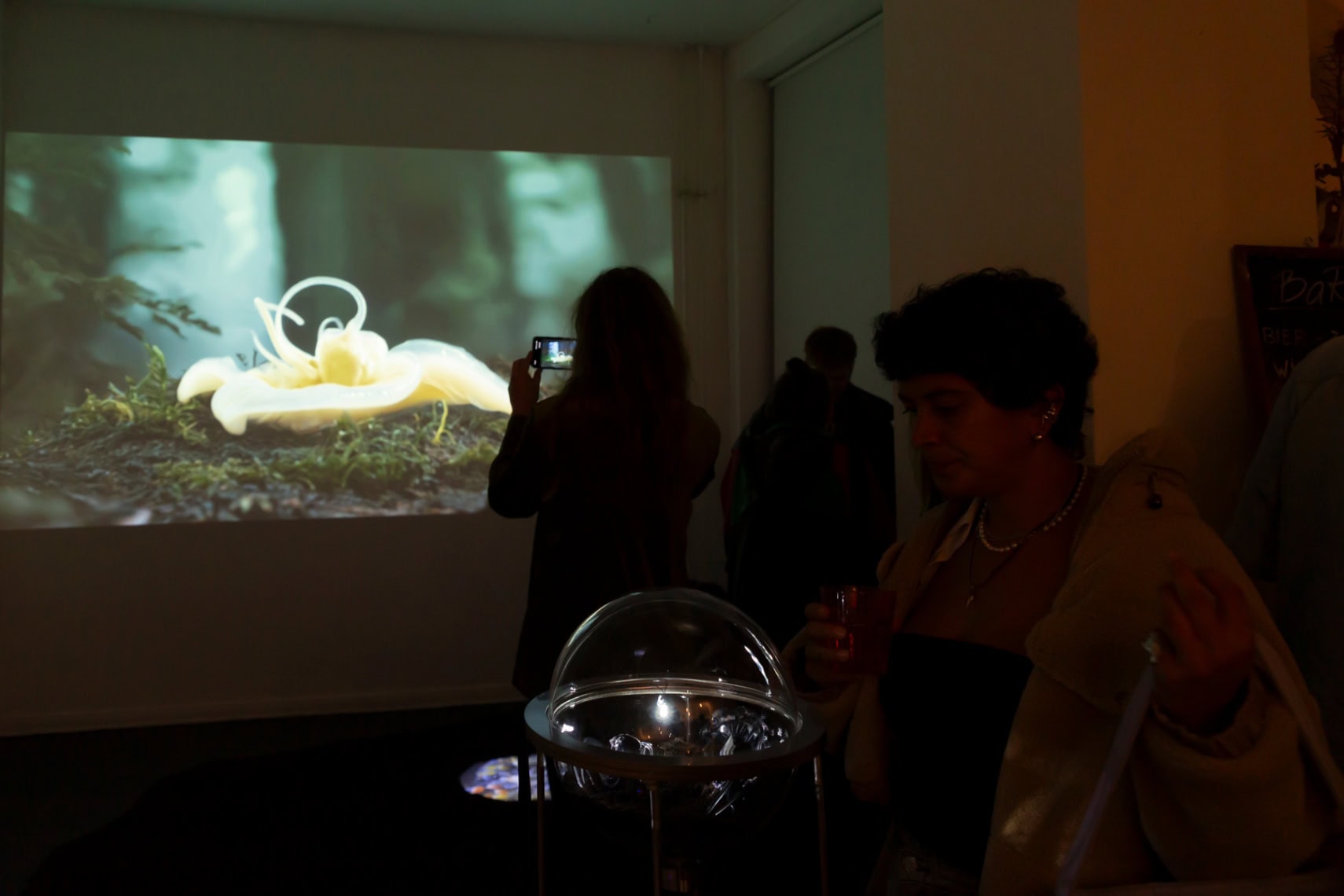
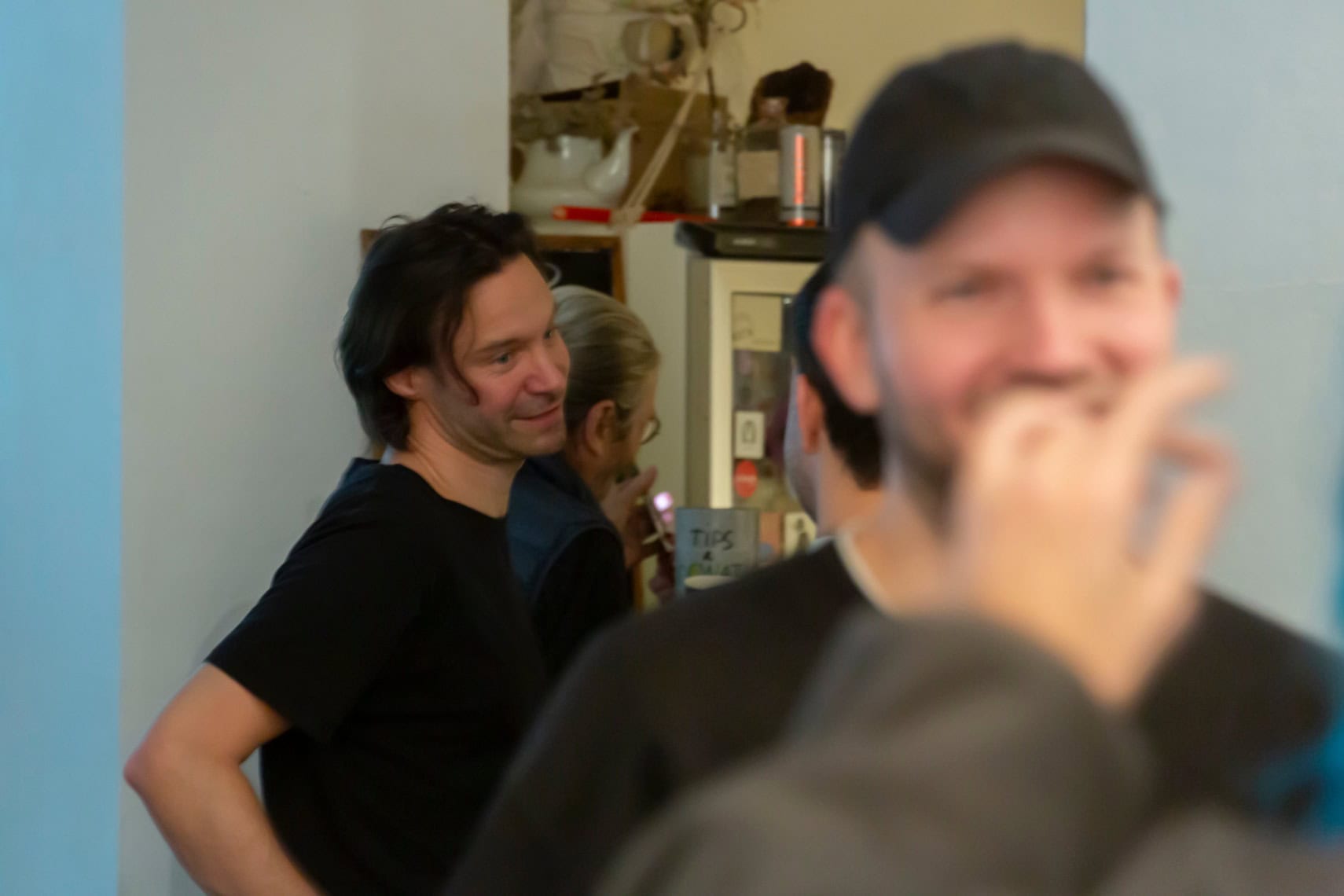
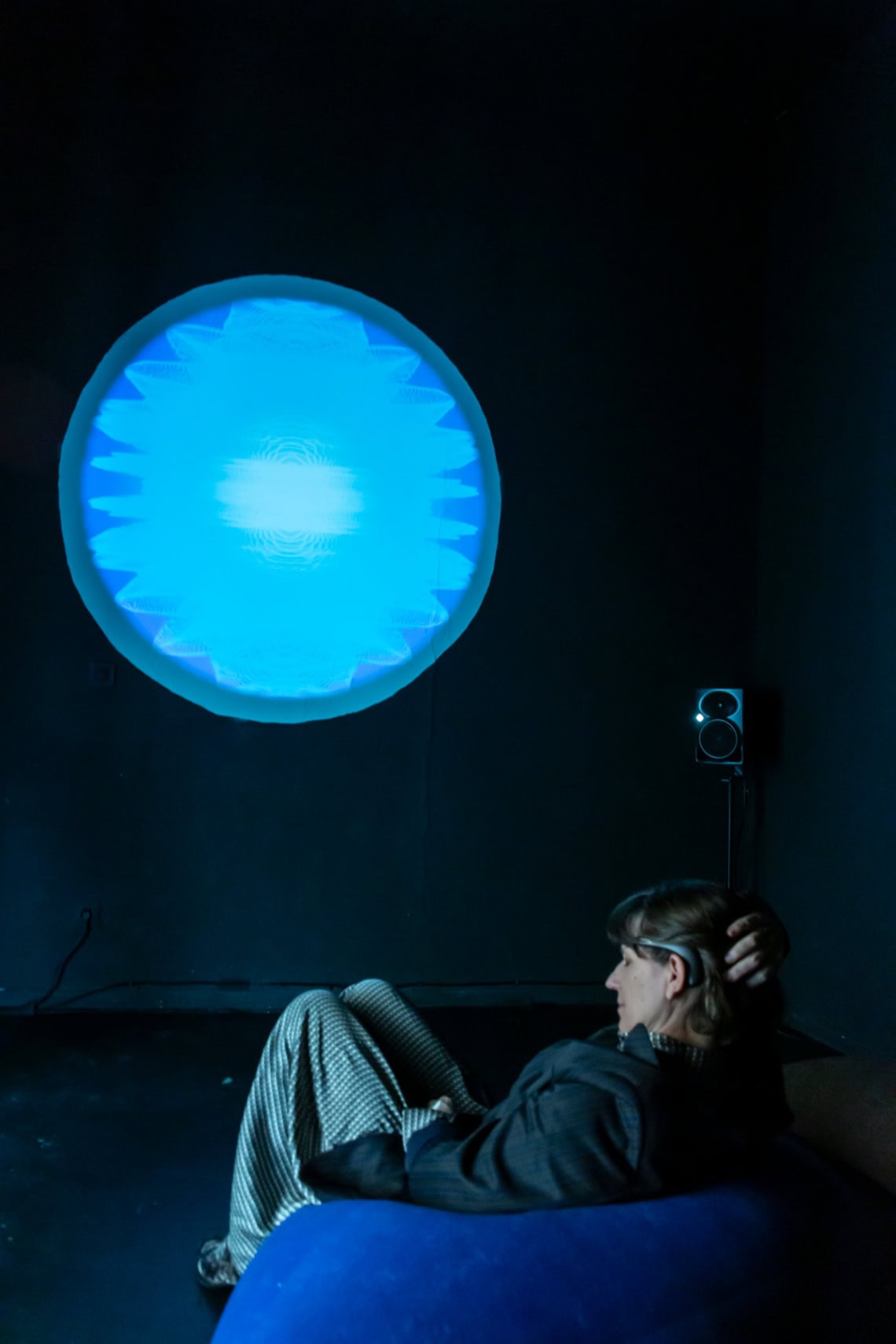
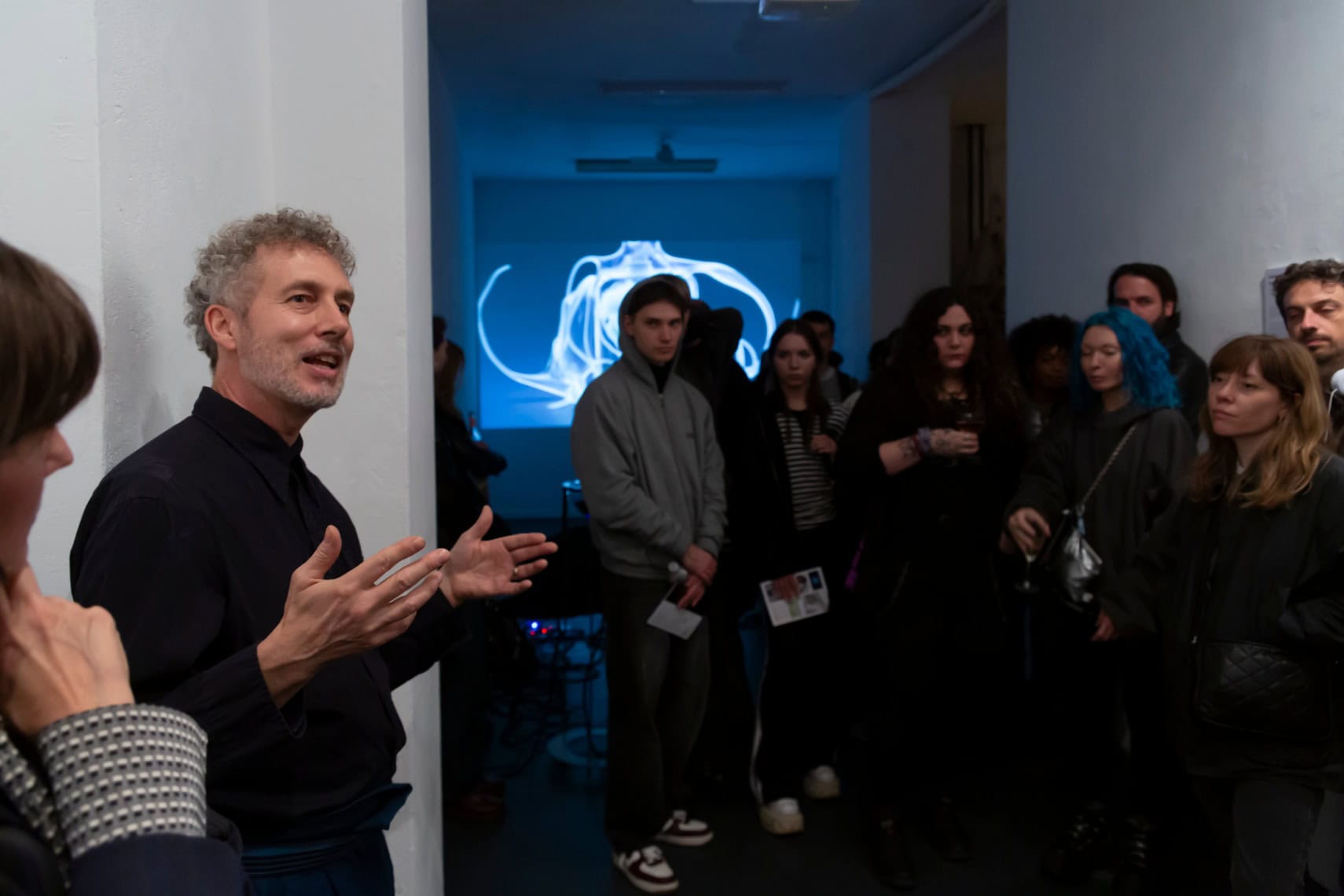
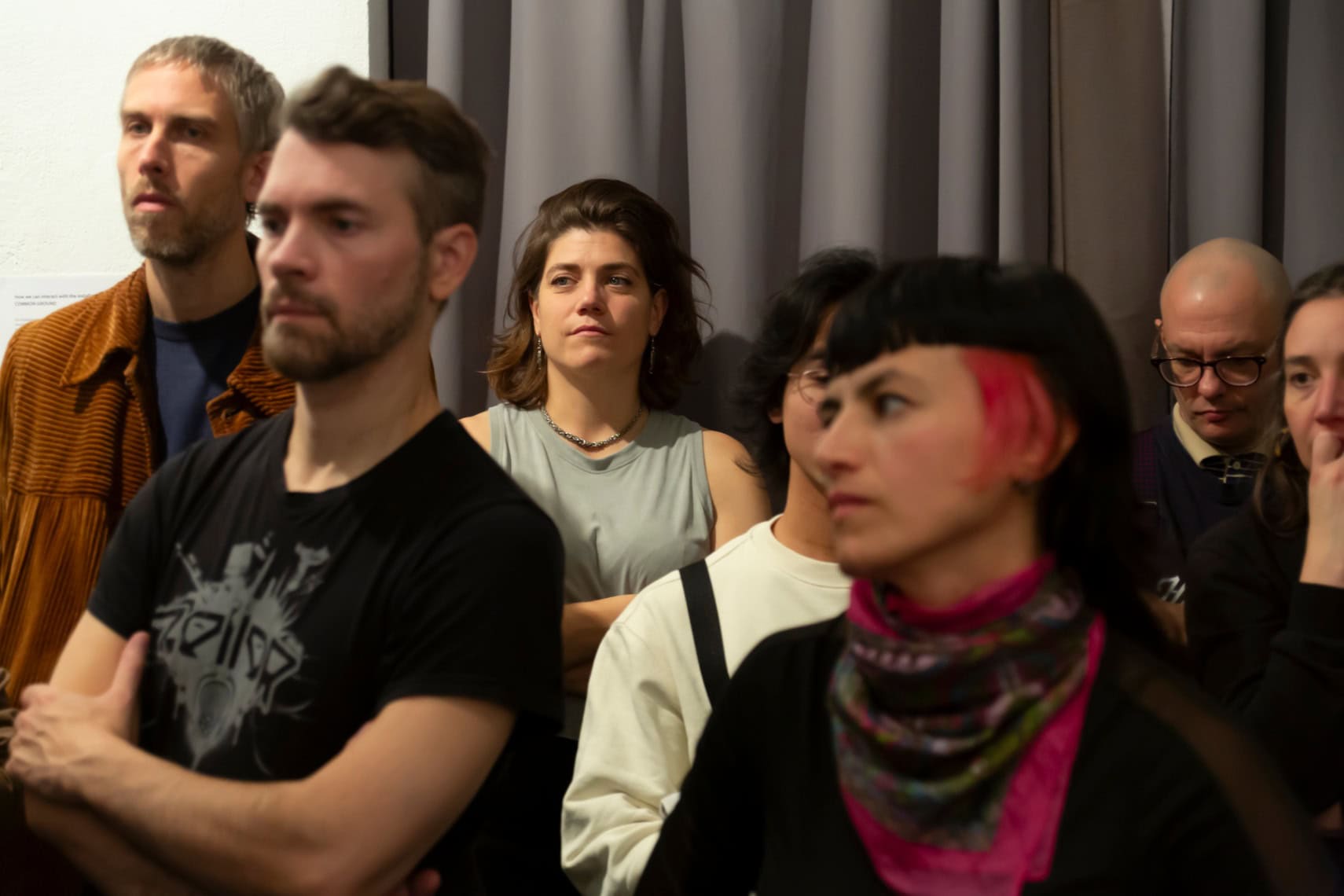
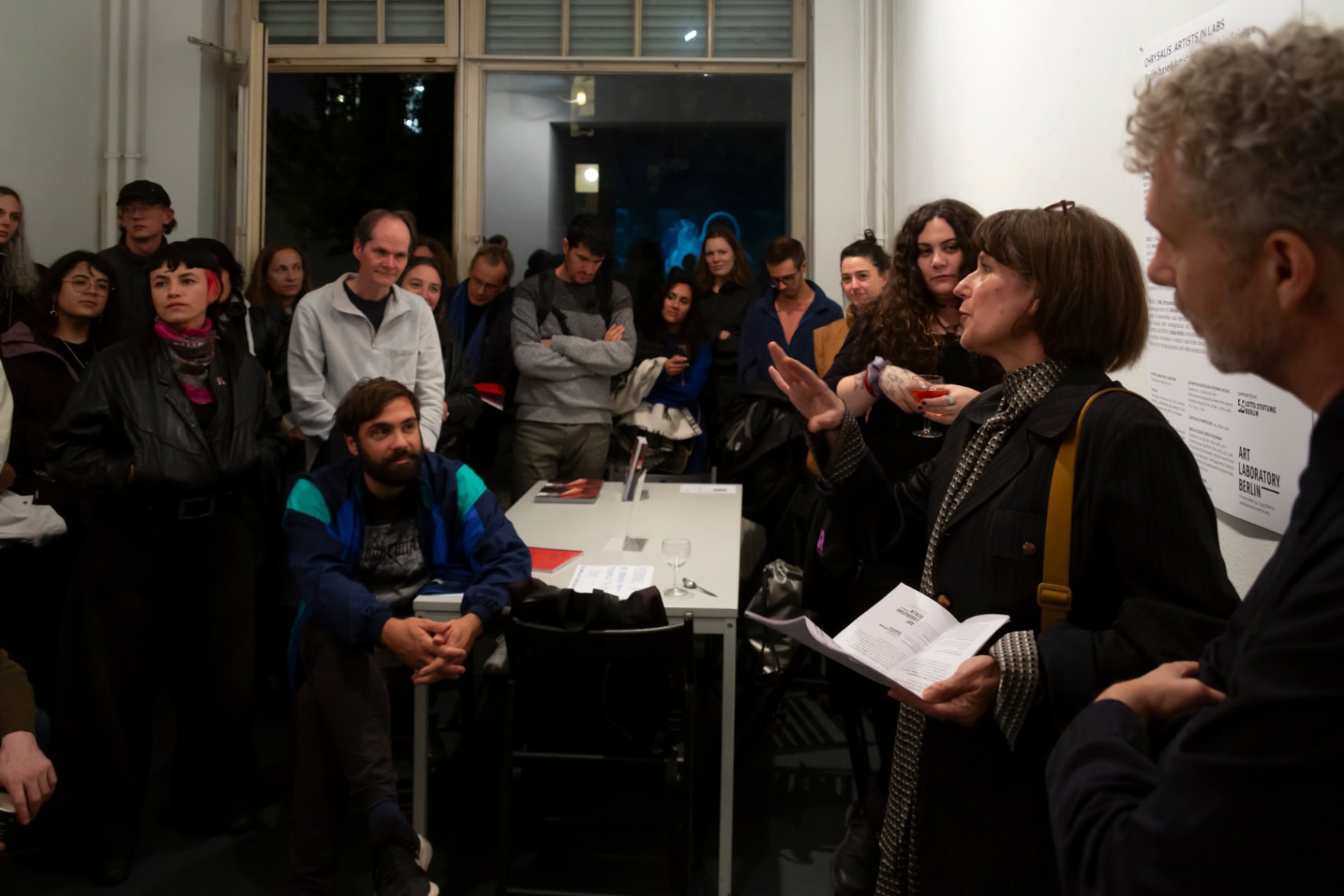
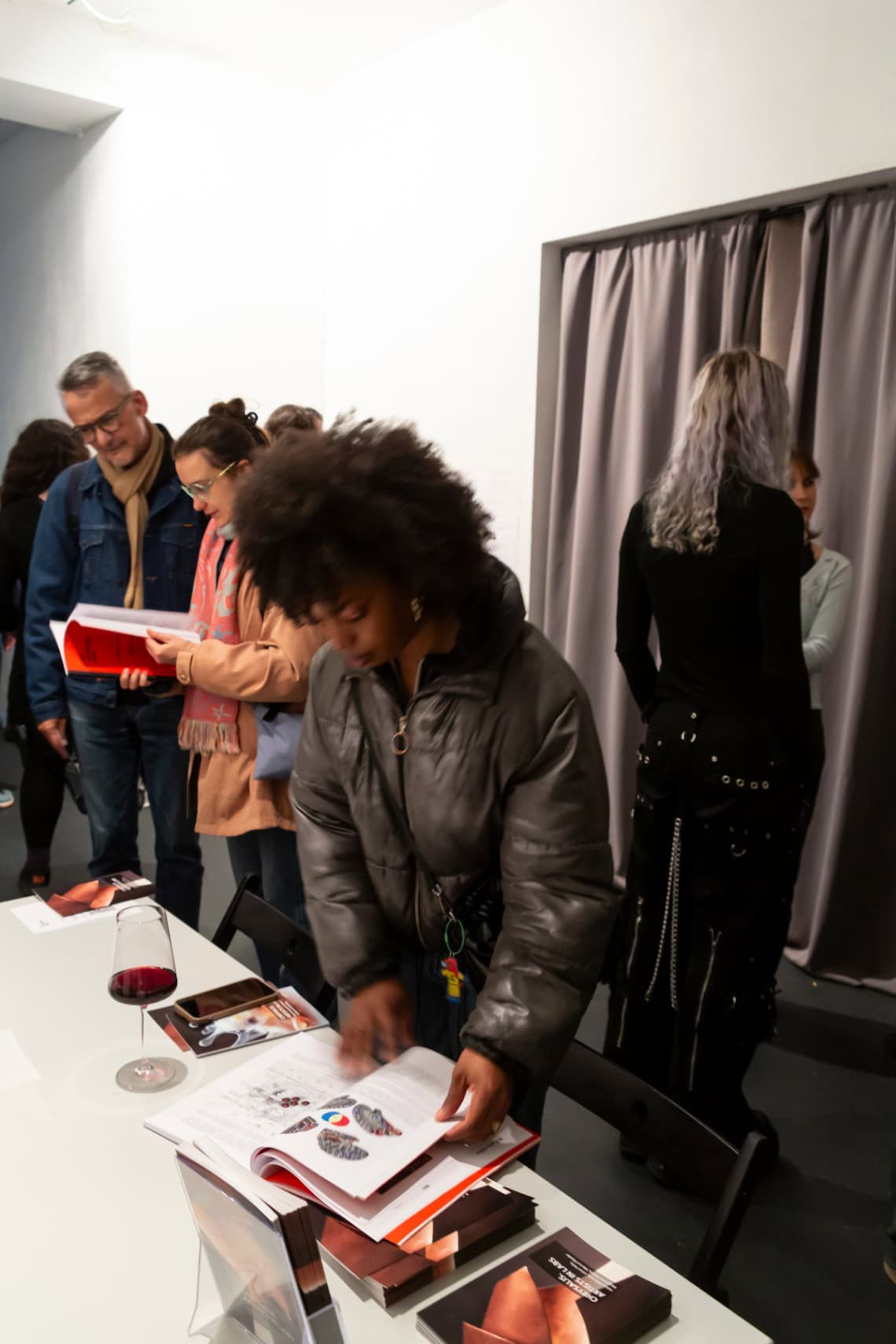
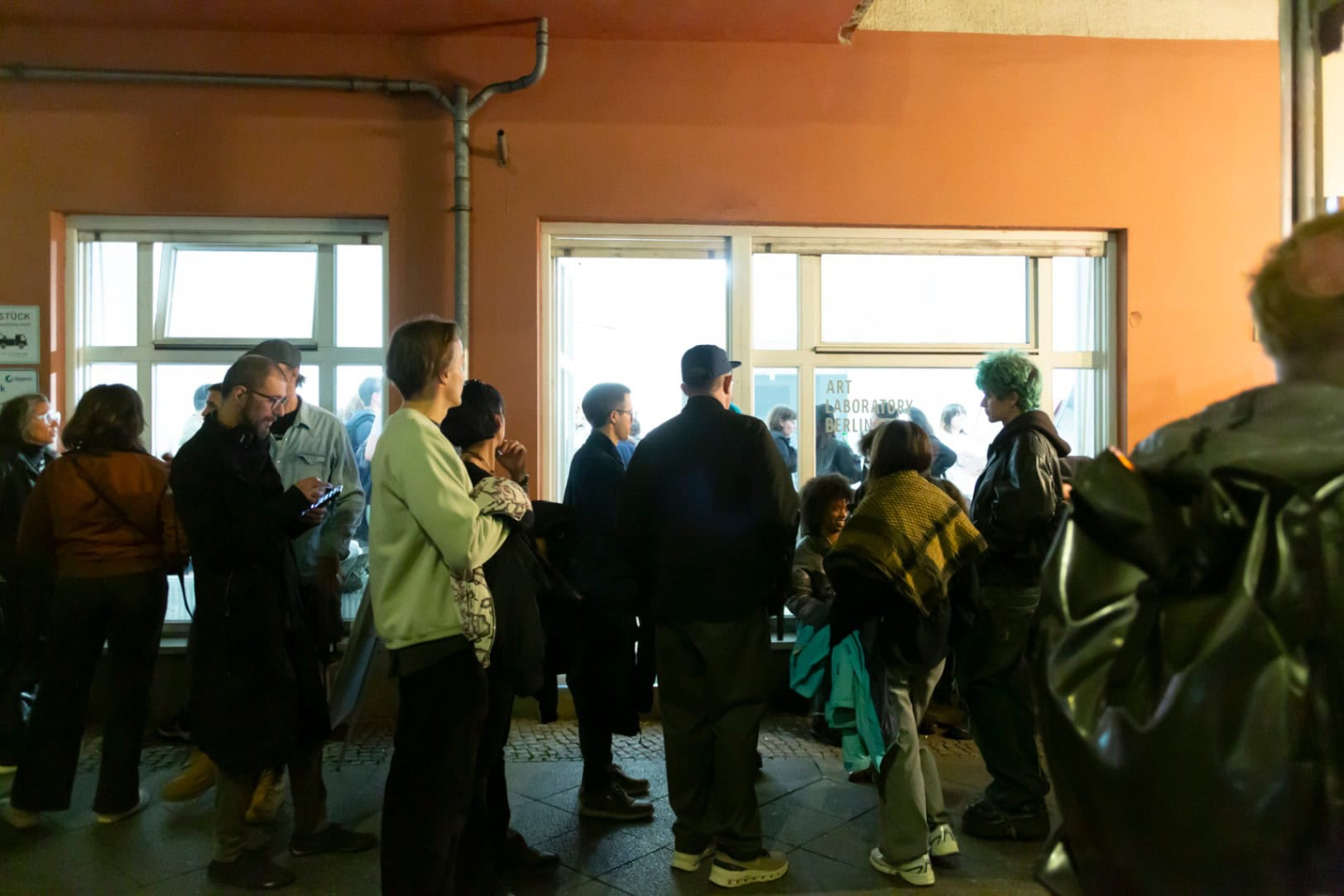
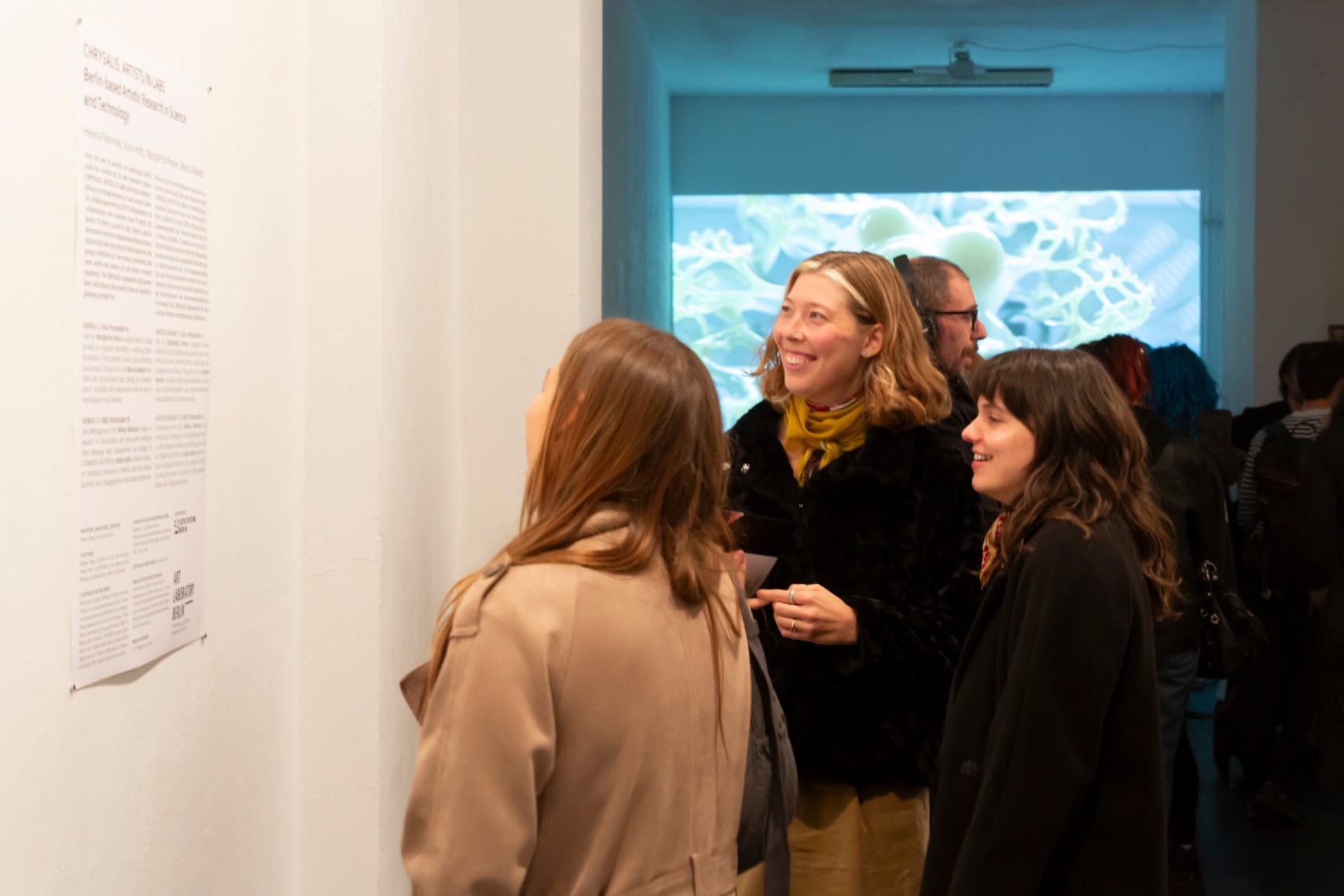
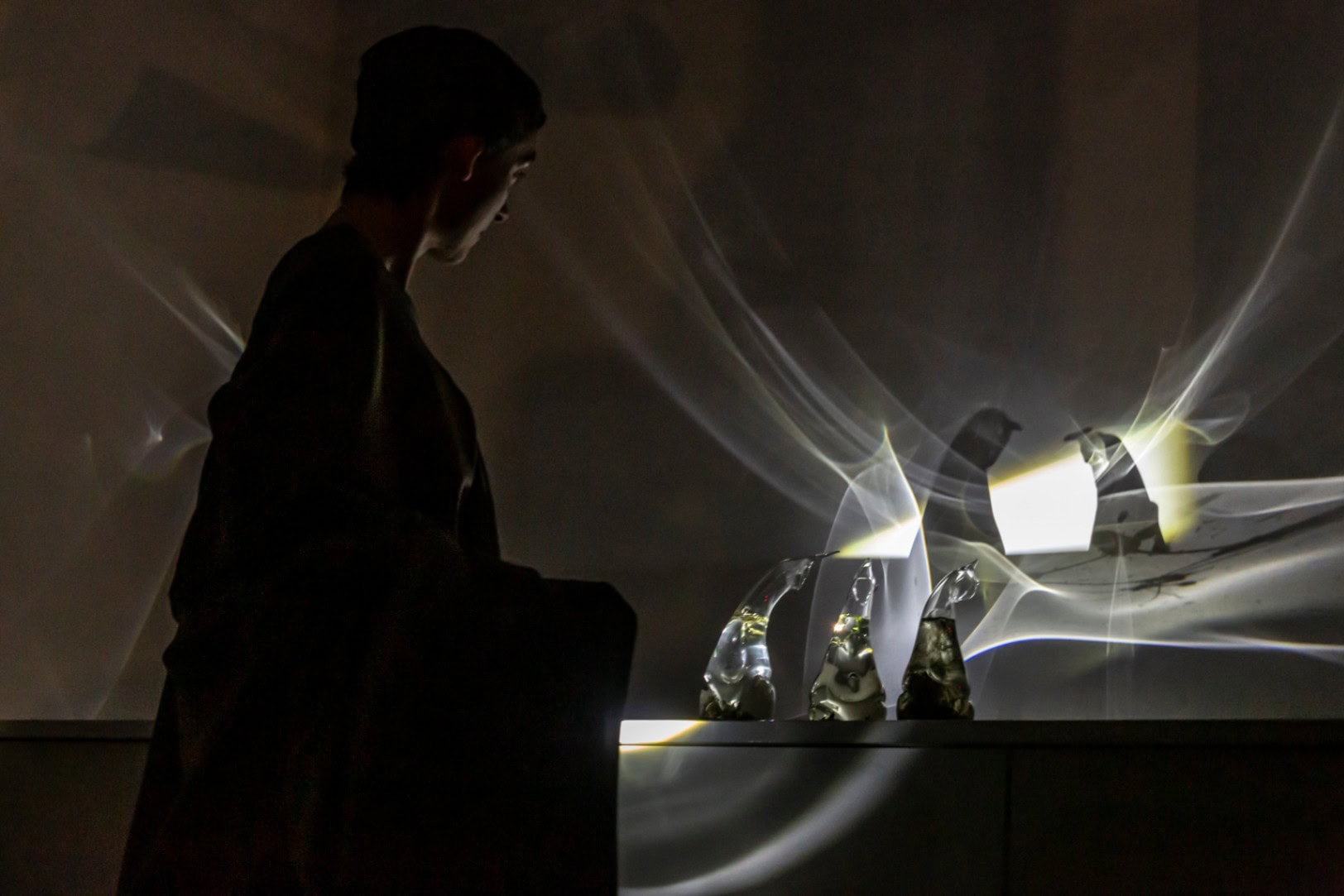
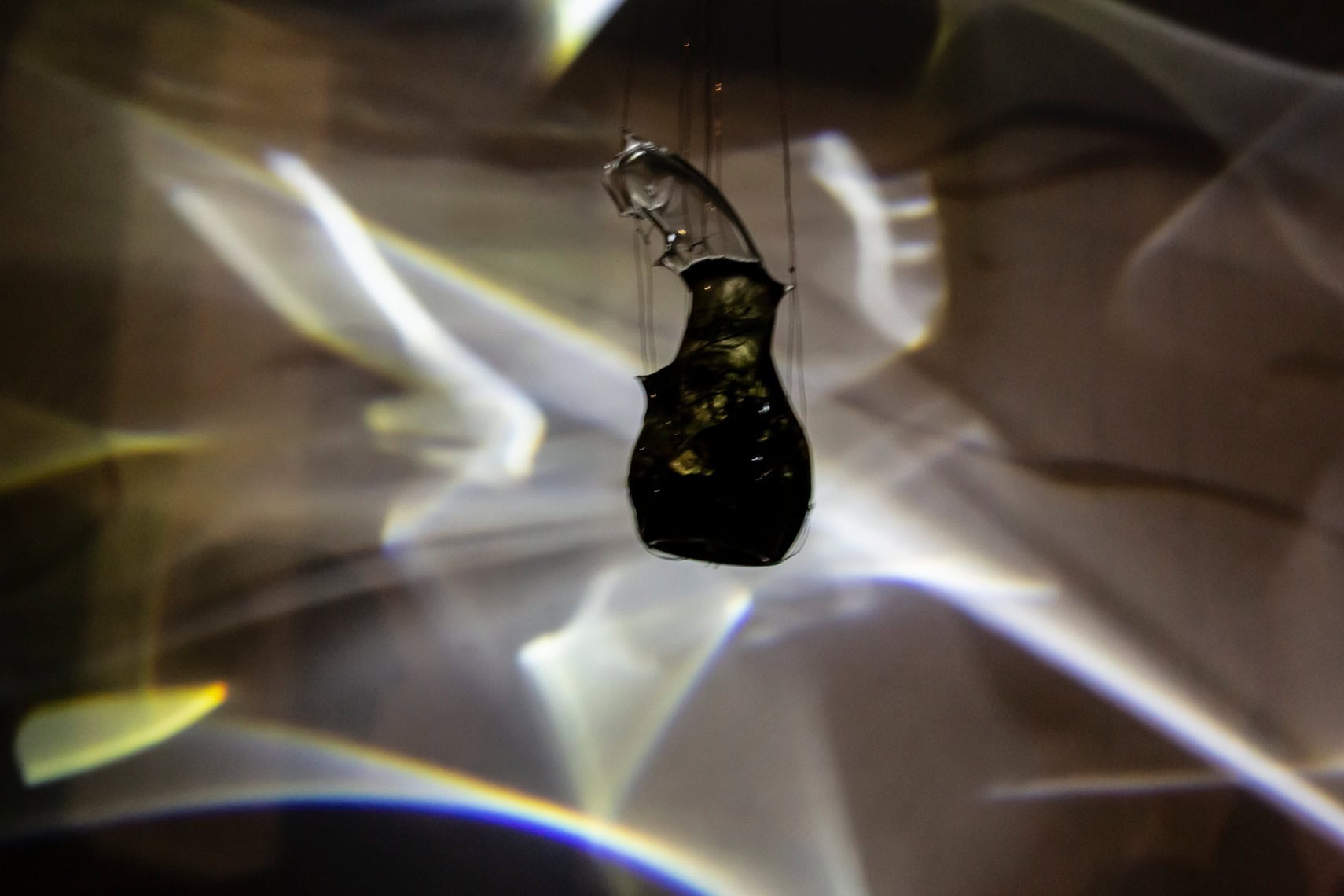
More information about the research project CHRYSALIS. ARTISTS IN LABS with the biographies of all artists, and an overview with photographs and video recordings of the CHRYSALIS public program: HERE.
Venue
(1) Art Laboratory Berlin
Prinzenallee 34, 13359 Berlin
(2) OKK, Prinzenallee 29, 13359 Berlin
Dates and opening hours
Opening: Fri, 25 September 2026, 8 pm
Performance by Margherita Pevere at the opening night
Running Time: 26 Sep – 29 Nov 2026
Thu – Sun, 2 – 6 pm
Berlin Science Week @ ALB: 1 Nov 2026, 3 pm Exhibition Tour through the CHRYSALIS group exhibition: with Regine Rapp and Christian de Lutz
Berlin Science Week@ HKW: 7 November 2026, 2:30 – 4 pm: Panel Discussion “TOUCHING BOUNDARIES. What Drives Art and Science Collaboration” with Špela Petrič, Marcus Maeder, Miha Tursič, Matthias Rillig, Regine Rapp, and Christian de Lutz
Interdisciplinary International Symposium: Sat, 28 November 2026, whole day, with all exhibiting artists and scholars from humanities and science.
MENTORS, MEDIATORS, Curators
Regine Rapp & Christian de Lutz
ALB Team
Regine Rapp, Christian de Lutz, Alice Cannavà,
Neele Marr, Zoë Rehnborg, Elisa Mengoli, Giulia Marsigli, Amandine Hong-Minh, Tim Deussen
Cooperation partners
Rillig Lab | Ecology of Plants, Institute of Biology, FU Berlin
Bernstein Center for Computational Neuroscience, HU Berlin
German University of Digital Science, Potsdam
Sleep Research & Clinical Chronobiology, Institute of Physiology, Charité Berlin
Jeschke Lab | Ecological Novelty, Institute of Biology, FU Berlin
The Leibniz Institute of Freshwater Ecology and Inland Fisheries (IGB)
ARL – Akademie für Raumentwicklung in der Leibniz-Gemeinschaft, Hannover
Berlin Open Lab, TU Berlin, UdK Berlin
Einstein Center Digital Future, TU Berlin
Weizenbaum Institute, UdK Berlin
OKK , Berlin
Media partners
CLOT Magazine | London
Supported by

Part of the research project:
Related
CHRYSALIS. ARTISTS IN LABS
- Berlin-based Artistic Research in Science and Technology
- With Helena Nikonole, Julius Holtz, Margherita Pevere, Marcus Maeder
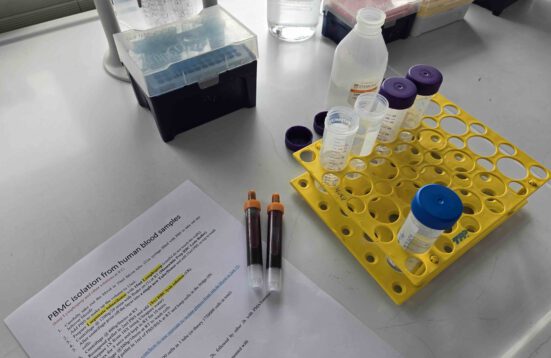
ALB is initiating artist-in-lab residencies for internationally recognized, Berlin-based artists, supported by Lottostiftung Berlin. The new project is an interdisciplinary exchange between art and science in Berlin science laboratories at all three universities of Berlin, the University of the Arts Berlin, and the Charité. We expect strong outcomes in transdisciplinary knowledge transfer, artistic research, and critically highlighting 21st-century innovations.
Read more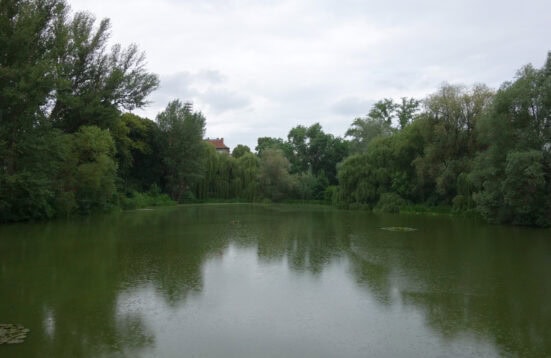
CHRYSALIS. ARTISTS IN LABS
- Pond Codex: Of Life and Death in Berlin’s Small Water Bodies
- Workshop with Margherita Pevere and Germán Joosten
Artist Margherita Pevere and anthropologist Germán Joosten invite participants to engage with the life cycles of Berlin’s ponds and small lakes. Focusing on Daphnia, a keystone grazer that shifts between clonal and sexual reproduction, the workshop explores how this organism reflects urban water health and futures. Through hands-on sessions and speculative storytelling, participants adopt a more-than-human, pond-centered perspective on Berlin’s aquatic ecosystems.
Read more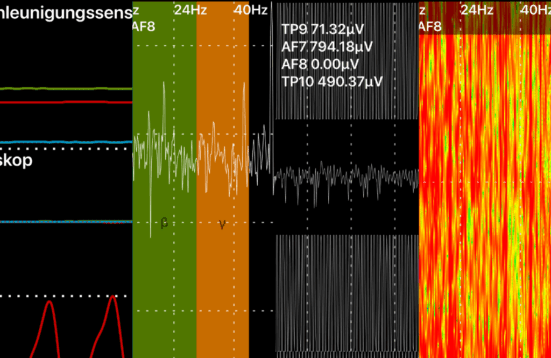
CHRYSALIS. ARTISTS IN LABS
- Sonic Mind. Sound, Consciousness, and Technology
- Workshop with Julius Holtz
In the workshop “Sonic Mind” sound artist Julius Holtz explores sound consciousness and technology through interdisciplinary research linking neuroscience and artistic practice. Participants can join embodied listening sessions and experiments with data sonification and human machine interaction. The workshop rethinks identity community attention and perception. It fosters awareness empathy and new relationships between humans and adaptive systems today.
Read more